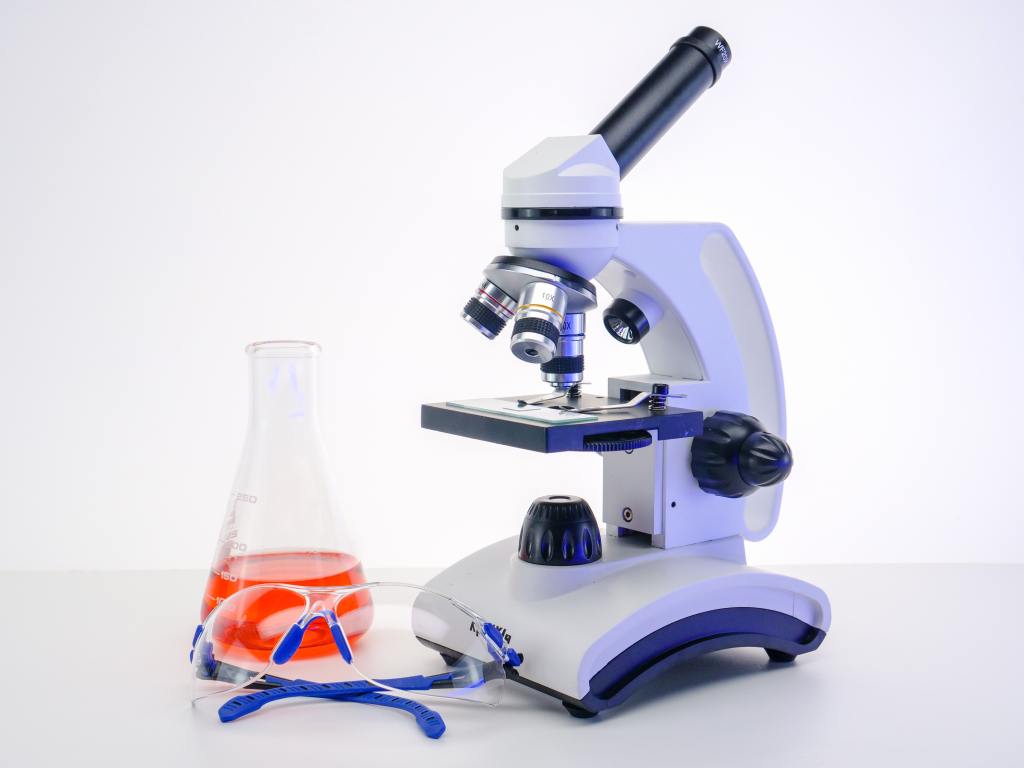
What’s an Atom⚛ and What’s a Molecule? How are they related?

Atoms are the basic building blocks from which everything around us is built. This includes everything you see around you- you, me, us, trees, rocks, starts, dust everything..

All of them are made up of atoms. But what exactly are atoms?

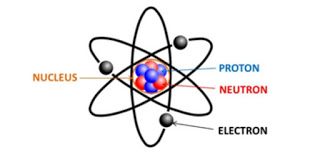
Atoms are made up of three types of tiny particles- Electrons (negative charge), Protons (positive charge) and Neutrons (neutral charge). Number of protons is equal to number of electrons in an atom keeping the overall atom neutral.
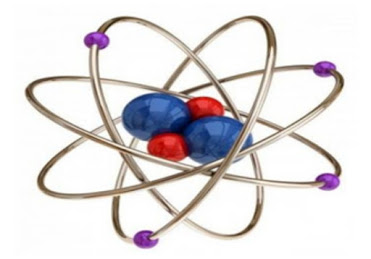
There are 118 elements in nature composed of a single type of atoms such as hydrogen, carbon, gold, oxygen etc. What makes each element different is the number of positively charged protons in the nucleus of the atom.

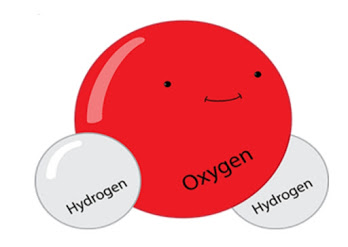
Molecules- Atoms bond together (either same species or different species) into groups and form a molecule. For example, two hydrogen atoms and one oxygen atom bonded together creates a molecule of water.
Fundamental particle – Electron, Proton, Neutron: What do we know about them?

Atoms, electrons, neutrons and protons are the basic building blocks of matter. Neutrons and protons make up the nucleus of an atom, while electrons circle this nucleus. 

Electron- An electron is bound to and orbits the nucleus of an atom. This indivisible particle has a negative charge, often referred to as “minus 1.” Its mass is 1/1,837 of the mass of a proton. An electron was discovered by J.J. Thomson in 1897.

Proton- Discovered by Rutherford in 1920, Proton Elements get their atomic number based on the number of protons found in each atom. Proton carries a positive charge, referred to as “1” on the atomic weight scale. A proton has a mass 1,837 times greater than that of an electron.

Neutron- Located in the nucleus of atoms, neutrons have mass slightly lower than those of protons. This indivisible particle gets its name for the fact that it has no electrical charge. It is 1,839 times the size in mass of an electron.

Four Fundamental Force of Nature – Which Control Our Universe🌌?

This question might have surprised many of you as they might have never thought about it there are such forces in nature that define our existence or define the way Universe works. Read on about these forces-

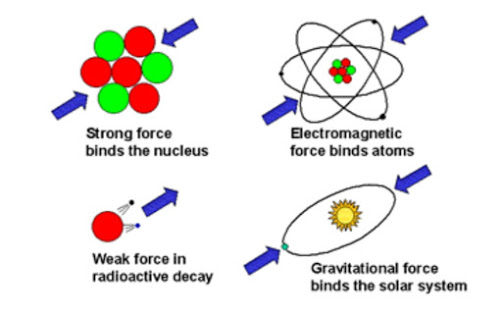
The Four Fundamental Forces of Nature are Gravitational force, Weak Nuclear force, Electromagnetic force and Strong Nuclear force.

Gravitational Force- All of us know about this. It is the force that keeps the planets revolving. Keeps us hooked to Earth. Gravitational force is the force that acts between any two bodies in Universe. It is the weakest force among all four fundamental forces.

Electromagnetic Force- It is the force that works between a positive & negative charge. It is the force that causes electric and magnetic interact. It is the force that defines light (electro-magnetic radiation), electricity & magnetism.

Strong Nuclear Force- The strong interaction is very strong, but very short-ranged. It is responsible for holding the nuclei of atoms together. It is basically attractive, but can be effectively repulsive in some circumstances. 

Weak Nuclear Force- The weak force is responsible for radioactive decay and neutrino interactions. It has a very short range and. As its name indicates, it is very weak.

Together all these forces make, hold and control our universe. These are the forces that keep electrons rotating around a nucleus. These are the forces that keep the planets, start, galaxies under equilibrium- in short these forces control our Universe.

Do you know how is Electricity produced?

How important Electricity is to our modern day lives is known to all. But how many of you know how exactly electricity is generated! 

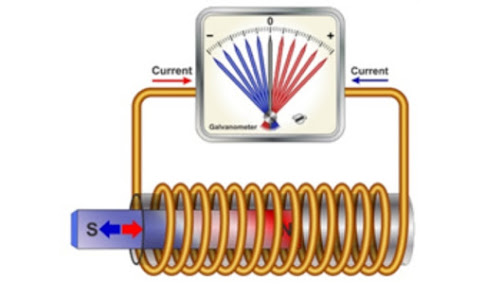
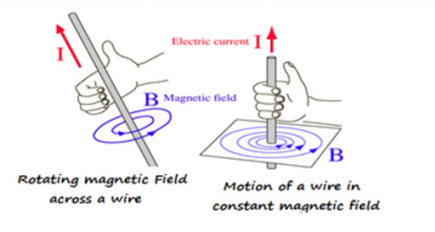
The basic principle on which electricity is produced was discovered by Michael Faraday in 1839 and is called Faraday’s Law of Induction. As per this principle, “An electric current is produced whenever there is a change in the magnetic field around a conductor and vice versa.”

To produce electricity, change in the magnetic flux (filed) associated with a conductor. The mechanical energy of a system gets converted into electrical energy.

Electricity Generation Power Plants-

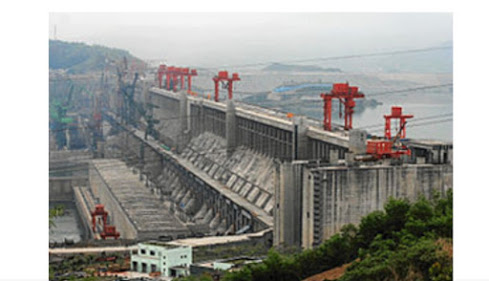
Electricity is produced in power plants. Power plants can be hydro powered or coal powered or nuclear powered. Irrespective of the plant, basic principle remains the same. Only difference in these plants is the mechanism by which the turbine (conductor- magnet system) is rotated.

How does motor car works?

Modern day life cannot be imagined without cars, trains, motor-cycles etc.

All of us know that there engines run on diesel or petrol as fuel but, how exactly diesel or petrol makes these machines run? What’s the science behind it? These are a few questions we will try to address through this question. So, get along..

How does a car engine works-

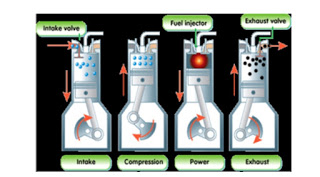
The car or vehicle runs by energy released in the engine by burning fuel. The chemical energy of fuel is converted into heat energy which moves the piston. There are 4 stages or strokes as we call it in this energy conversion cycle.

These are shown in the figure below.

4 Stage/ Strokes Engine: Working Mechanism-

There is a cylinder which houses a piston, intake valve, exhaust valve, fuel injection system. The piston in turn is connected to a crank-shaft.

How does brakes of a car work?

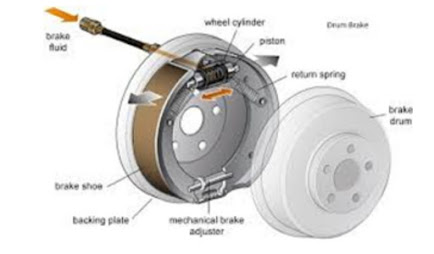
We all know that pushing down on the brake pedal slows a car to a stop. But how does this happen? How does your car transmit the force from your leg to its wheels? How does it multiply the force so that it is enough to stop something as big as a car?

When you depress your brake pedal, your car transmits the force from your foot to its brakes through a fluid. Since the actual brakes require a much greater force than you could apply with your leg, your car must also multiply the force of your foot. It does this in two ways:

·         Mechanical advantage (leverage)

·         Hydraulic force multiplication

The brakes transmit the force to the tires using friction, and the tires transmit that force to the road using friction also.

What is an E-cigarette?

In the days on Internet, everything is going the e-way. e-rail, e-ticketing, e-shopping, e-medical consultations. One similar word is e-cigarette. Many of you might have heard about it. Let us see what it is, how it works and if it is hazardous for human.

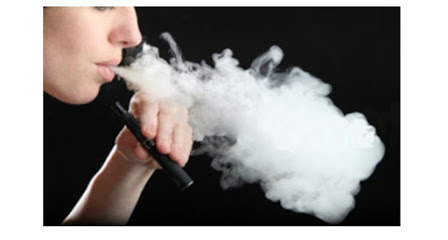
E-cigarette also known as electronic cigarettes or vaporizer cigarettes are devices that emit doses of vaporized nicotine which is inhaled. The device is battery-operated and can also emit non-nicotine vaporized solutions. Manufacturers say they are an alternative for tobacco smokers who want to avoid inhaling smoke.

E-cigarettes are long-shaped tubes, many look like the product the user used to smoke, such as a cigarette, cigar or pipe. Some look like ballpoint pens. The majority are reusable with replaceable and refillable cartridges. A small percentage of products are throw-away ones – disposable e-cigarettes.

–          Cigarette e or non-e are injurious to human health and must be avoided.

How does a fire🔥extinguishers work?

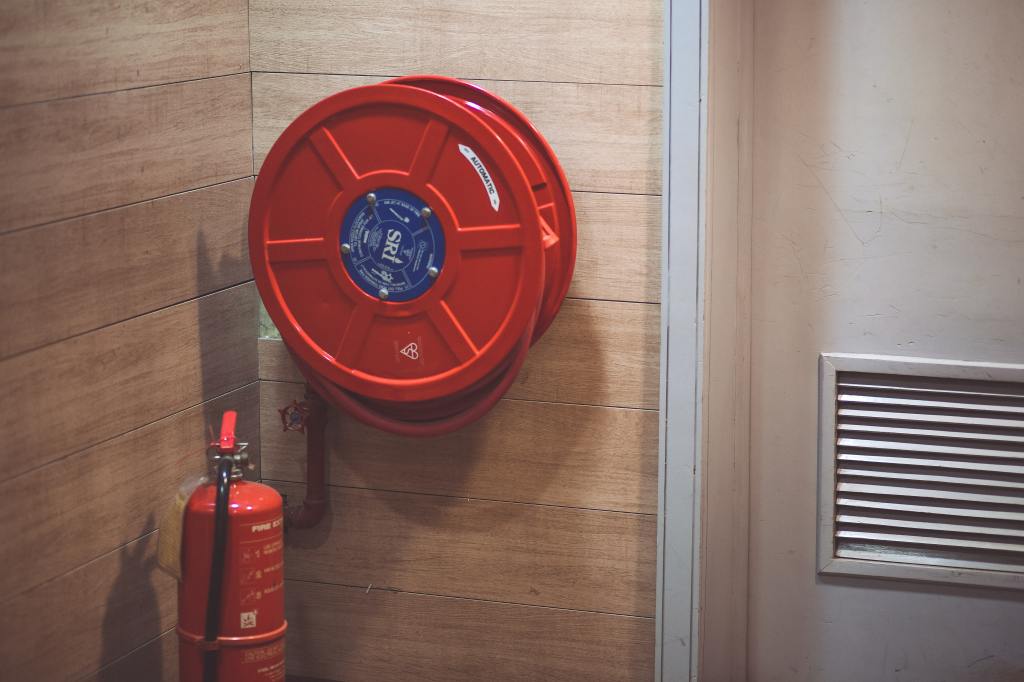
All of you might have seen fire extinguisher cylinders. How it works and how it is operated, we will discuss here.

At the top of the cylinder, there is a small cylindrical container filled with compressed gas. The release valve acts as a locking mechanism and prevents this gas from avoiding. When you pull the safety pin and pull the liver, the liver pushes a stick which opens the path of the nozzle to suppress the valve.

 Compressed gas has been released, low pressure is used on fire extinguishing material, and exits the nozzle under tremendous strength.

CO2 firefighters are commonly used. Carbon dioxide is a non-flammable gas. As we know that CO2 is heavier than oxygen and is very cold, it removes oxygen from the surrounding area or cools the fuel.

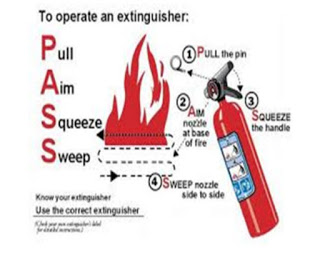
How to operate these- See the figure below for this. The keyword here is PASS. Each letter of this word is explained in the figure.

How Paper is Made?

Have you ever wondered where does the paper comes from! How it is manufactured!

Paper which over which students write their notes, newspapers are printed even our currency notes are made of paper.

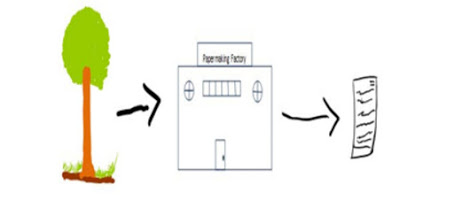
Paper is made from woods and wooden mixtures (buraada).

Process of paper-making- The wood from the tress is made into fibrous from (buraada). This fiber is mixed with water & other chemicals and through a pressers and convert it into sheets. Then, this water is dried up leaving behind thin sheets of paper.

How important the trees are for human life is very well known to all of us. Therefore, one should never waste the paper.

How does microscope🔬work?

“Microscopy is a branch of science, in which microscopic and neutral organisms are able to see, which cannot be seen with simple eyes.”

The single convex lens can be called the simplest microscope. It can magnify the image of an object is the object is kept a appropriate distance (within its focal length).

Simple microscope consists of a combination of two or more numbers of convex lenses at a appropriate distances.

 These distances are set such that the image formed by the first lens gets further magnified by the 2nd or 3rd lenses. Hence, the much higher magnifications.