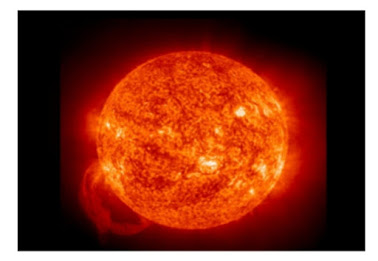
Sun the star that our Earth rotates about. This is the Sun that makes the life possible on Earth. It is Sun that gives us the light which is the source of almost all the energy which humans or any other life forms use.
Few interesting things about the Sun-
• The Sun is a star. It appears bigger than stars as it is closer to us.
• Sun’s diameter is about 13, 92,000 km. The age of the sun is about 5 billion years.
• The sun’s light to reach the earth in 8 minutes 16.6 seconds.
• The minimum distance from the Sun of the Earth is 14.70 million km. The maximum distance from the Sun to the Earth is 15.21 million km.
• 71% of hydrogen, helium 26.5% and other 2.5% of the chemical mixture constitute sun. All stars, including the sun and the hydrogen fusion reaction is said to be a mixture of helium.
• Light spots on sun are called penumbra which emit electromagnetic radiation that the Earth is a breakdown of the wireless communication.
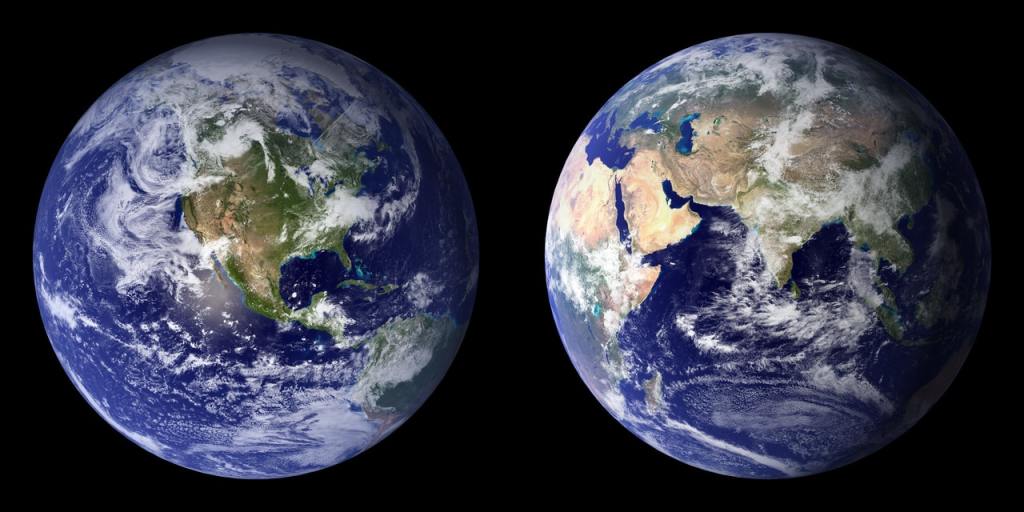
Earth –Our home, where we all are born, live and die is an unique planet in the entire Universe. Not a single planet has been observed so far where life is possible in the entire universe.
Let us have a quick glance over a few things about Earth that many of you may not aware of-
• Only planet that can support life.
· Only planets that has water in the liquid form.
· Earth gets heat from heat not only from the sun, it also receives heat from inside its temperature, which is approximately 60000C.
· 450 million years ago, a planet had collided with the earth due to which a part of the Earth was broken and got flown into sky. This is what we call the Moon.
· Earth rotates on its axis in approx.. 24 hours (1 day) and approx.. 365 days to complete 1 rotation about the Sun (1 year).
Whenever the sky is discussed then the solar system is also discussed. What is the Solar System?
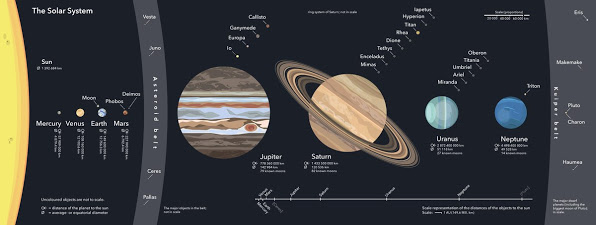
The Sun, its 8 planets, 166 known satellites to planets, comets, five dwarf planets and billions of small bodies… that directly or indirectly rotate about the Sun form the Solar System.
Brief info on planets of the Solar System-
1. Mercury
Mercury is the closest planet to the Solar System and is the smallest planet in size. Pluto was formerly considered to be the smallest planet but now it is classified as a dwarf planet. It takes 88 days for the Sun to revolve.
2. Venus
Venus is the second planet from the Sun. The size and make-up of Venus is almost equal to Earth. That is why Venus is called Earth’s sister.
3. Earth
The third planet Earth is our own home. Earth is the third planet from Sun to Mercury and Venus. Larger than all of the inner planets, in complete consciousness, earth is a returning planet where life is at.
The average distance of the Earth from the Sun is called the celestial unit. It is about 15 crores kilometers
4. Mars
Mars is the fourth planet from the Sun in the solar system. Its aura from the Earth looks dull, because of which it is also known as the “Red Planet”.
5. Jupiter
Jupiter sun is the fifth and largest planet in our solar system. It is a gas monster whose mass is equal to the Thousand part of the Sun and 2.5 times the mass of the other seven planets in the Solar System.
6. Saturn
Saturn is a member planet of the Solar System. It is at the sixth place in the sun and in the solar system there are the largest planets after Jupiter. Saturn has 62 satellites. In which Titan is the largest. Titan is the second largest satellite after Jupiter’s satellite, Guinness.
7. Uranus
Uranus is the seventh planet from the Sun in our solar system. On the basis of diameter it is the third largest of the solar system and the fourth largest planet on the basis of mass.
8. Neptune
Neptune is the 8th planet from the Sun in our solar system. On the basis of diameter it is the fourth largest planet of the Solar System and the third largest planet on the basis of mass. Neptune takes 164 years to complete a full revolution of the sun.
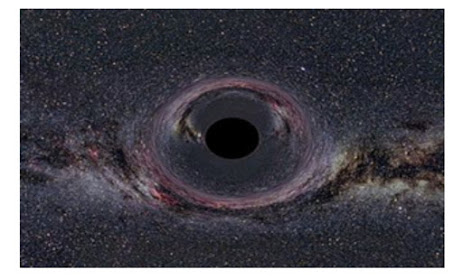
Black hole is a body whose gravitational field is so strong that nothing can come out of it- even electromagnetic waves (sunlight) also cannot escape from it.
When a body has so much mass that it due to its own gravitational force, the body starts shrinking. As the radius decreases, the gravitational force becomes even more stronger. Eventually, the body keeps shrinking- shrinking and shrinking and becomes a point. Though how this happens, i.e. becoming a point of not or what happens after that, is still not known to scientists.
If anything falls into it, that things can never escape from it. It is like a swirling demon in universe that easts up all the things that come within its range called event horizon.
Do we need to fear from Black Holes! Our nearest black hole is at such a distance that we are not in danger for the next hundred years. Also, our sun is also not so big that it becomes a black hole.
Let’s talk about some strange things about black holes.
1. Black holes are not infinitely small. The more gravitational effects will increase, the smaller the star center will grow. Small, and small, and small … At one time it will come that it will reach such a size which is called Plank Length. This is a unit which is not possible in quantum mechanics. How long this is! 1 Planck Unit = 10-34 Meters
2. Everything near the black hole is bizarre- Black hole distorts the time-space with its gravity
3. Going into black hole causes death in a strange way- Assuming that the feet of a person are near the black hole, it will mean that the gravitational force on its feet will be much more than its head. This difference will be so much that the feet of that person will be pulled from the earth by its gravity to millions of times more force. The person will pull out and become like a long thread, and after that it will be broken.
4. There is too much glow around the black hole- The substance that falls in a black hole starts to orbit around the black hole. Due to excessive friction between the particles of matter, its temperature becomes high, this temperature reaches to millions of degrees. The substance at very high temperatures becomes very bright.
The name of the planet we live on is the earth. Earth is an integral part of the rest of the planets in our solar system. But where our solar system is in the Universe?
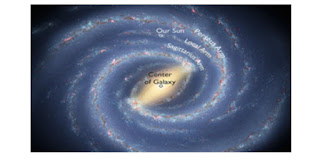
Our solar system is just a small part of a galaxy. A galaxy is a group of many gases, dust and the solar systems of billions of planets combined.
Universe has billions of galaxies. Our Galaxy name is Milky Way. The Milky Way is a spiral in shape.
Have you ever thought about space, shimmering stars, glowing moon, sunny sun, how wonderful and unique sight is in front of our eyes, but in our busy life, we cannot pay attention to these things. All this is part of this vast universe.
We are going to tell some specific things about the universe here. Some of them may surprise you too. Let’s take a brief tour of the universe.
1. Everything in the universe is dynamic – the first thing that we are going to tell you is that nothing in the universe is stable, that is, there is no such thing which is always in its place. The moon turns around our earth, our earth revolves around the sun, and sun is also moving around with all our Milky Way of the Galaxy, and the Milky Way is also moving in Universe.
2. Space is totally mute: it is muted. Sound is needed for travel and there is no atmosphere in space. That is why space is full of silent silence.
3. There is also a star whose surface temperature is only 27 degree Celsius- Our Sun’s surface temperature is high, 5778 Degrees Celsius! But the surface temperature of a star WISE 1828 + 2650 is 26.7 degree Celsius. This is a brown dwarf.
4. The smell of space is like hot metal and roasting meat- Many astronauts have described the smell of space as hot and frying meat.
5. Humans can fly on the moon Titan on Saturn with artificial feathers on their arms- This is because Titan’s atmosphere is very dense and gravity is very low.
6. It is impossible to know the total number of cosmos- We can never count the stars of the universe. We can only think of roughly a reason, because every moment in the universe, millions of stars keep taking birth too.
7. Our sun keeps 99% of the total spectrum of the Solar System-
8. The footprint of our astronauts on the Moon will last for another 100 million years. There is no air on the moon, there is no rain, water does not flowing, then how can you remove the footprint?
9. Sun appears white from space- There is atmosphere on earth. The sun shines red, saffron and yellow with the effect of scattering passing through the light of the atmosphere. Space does not have the atmosphere, so the sun turns white.
10. Jupiter spends 10 hours on its axis on one go. This means that its surface is moving at a speed of about 50,000 km / hour.
11. Astronauts are two inches long in their journey. With no gravity in space, their joint spine becomes loose almost three percent.
12. One day of Venus is more than one year of Earth. Venus puts one round on its axis in 243 days of the Earth, while the orbiting the Sun takes 225 days. That is, one day more than one year.
13. There is the ocean of wine in space! The cloud named Sagittarius B2, which is 390 light years away from the center of our galaxy, is made of ethyl alcohol. That means the trillions of beer…
14. The largest known structure of the visible universe is 6-10 billion light years wide. The breadth of NQ2-NQ4 GRB is 6-10 billion light years. The scientific wonder is how such a large structure will be made?
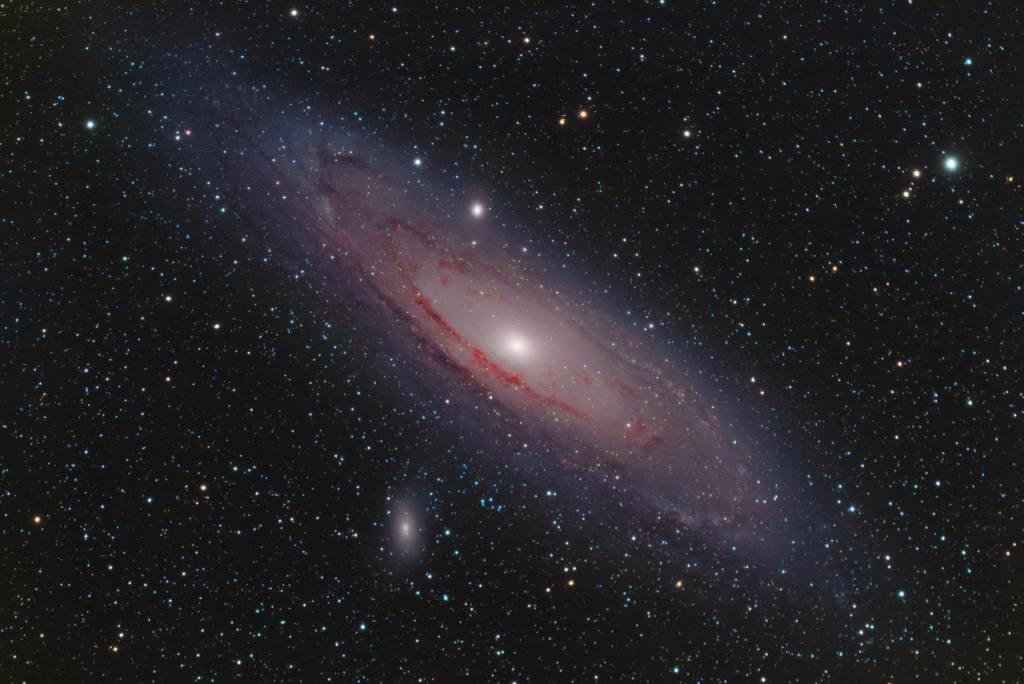
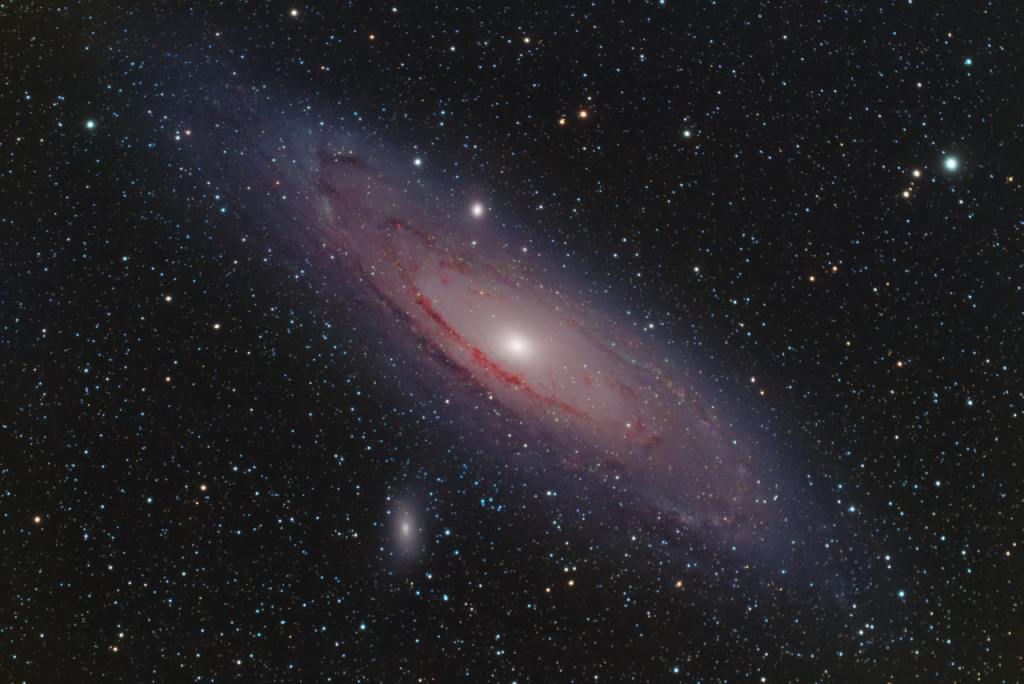
15. The speed of our galaxy Milky Way is 552 km / second. And at this speed it will hit 5 billion years from our neighboring galaxy Andromeda.
16. Moon is shifting away from Earth by 1.5 inches every year.
How the Universe was created? When was it created? Who created it? These are some of the fundamental questions which have troubled the intelligent minds from time to time.
Did the God created it? Well, we Physicist have not found that out yet! What we can tell you how or when did it all started or when did the current observable Universe came into existence.
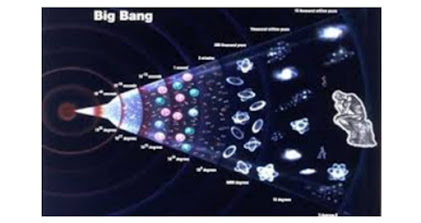
So, what we have here is…….BIG BANG!!! BOOM….
This theory explains how today the universe was born from an extremely warm and dense state about 13.7 trillion years ago. According to this the origin of the universe was from one point.
In 1919, Hubble found out that that the universe is spreading, the galaxies of the universe are rapidly moving away from each other. According to this principle, in the past, galaxies would have been close to each other and, if in the past, they would have been very close to each other.
From these insights, the Physicists have concluded that the universe originated from a condition in which all matter and energy of the universe was at one single place on very hot temperatures and densities. This condition is called Gravitational Singularity.
The Big Bang or the great explosion refers to the time instant when the expansion of the observable universe began. This time has been found 13.7 trillion years ago (1.37 x 10¹⁰) from today after calculations.
Here we too will discuss a few numbers which are important on the scale of the universe, In fact these numbers define our universe, makes our existence possible and even will decide the fate of the universe.
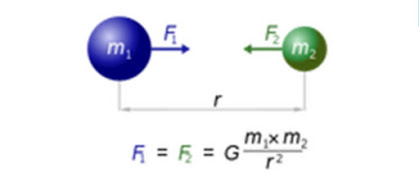
1. Universal Gravitational Constant
G = 6.67408 × 10⁻¹¹ m3 kg-1 s-2
According to Newton’s law of universal gravitation, the attraction force (F) between two bodies is directly proportional to the product of their masses (m1 and m2), and inversely proportional to the square of the distance, r, (inverse-square law) between them.
It is an interesting fact that the gravitational constant (G) was the first one to be searched before other twelve constants but its value is least accurately known. The reason for this lack of precision is its weak strength. It is the weakest force among all basic forces.
2. Speed of Light
c=299,792,458 m/s
Albert Mitchellson and Edward Morley showed that speed of light does not depend on its direction.
This finding allowed Einstein to postulate his most famous work which in a way revolutionised Science, yes, we are talking about, Theory of Relativity. This was the most important discovery of the 20th century and probably even so far.
3. Ideal Gas Constant
R=8.3144621(75) J/ K/ mol
When we combine the results of the experiments of Boyle, Charles and Gay-Lussac, it can be showed that for a certain quantity of gas, the temperature of gas is proportion to product of its pressure and volume. This ratio is called the Ideal Gas Constant.
4. Absolute Zero (0 Kelvin)
It is easy to produce heat. From prehistoric times, human has been using fire to produce heat. But cooling something is not an easy task. The absolute Zero is the least possible temperature. No temperature below than this is possible. At this temperature, speed of atoms of gases becomes zero. Its value is 0 Kelvin.
5. Avogadro’s Number
Avogadro’s number = 6.022169 x 10 23
How many molecules of a gas can be there in a volume? Italian chemical scholar Amadeo Avogadro proposed that the same amount of different gases at the same temperature and pressure would have the same number of molecules. Avogadro number is number of atoms present in12 grams of Carbon. It is also called the number of molecules in a one mole of gas.
6. The Relative Strength of Electricity and Gravity
Because, Electrical power is so much powerful than gravity, this makes life possible in this universe. If the electrical energy was weaker by gravity, then the universe was not possible in the present form nor the life in the present form. Electrical energy is 1036times more powerful than gravitational force.
7. Boltzmann’s Constant
K= 1.3807 x 10⁻²³joule/kelvin (J · K-1)
Have you ever wondered why the snowflakes get melt in a hot water pot but why don’t ice particles in form from cold water on its own? It is related to the distribution of heat and the solution to this problem was the biggest success of the 19th century.
This problem was solved by the Austrian physicist Ludwig Boltzmann, who had discovered that compared there are more nos. of distributions for melting of ice than to form ice from water (it can be thought in terms of degree of randomness). Nature’s game runs in percent. It often chooses the most possible way line and this tendency is defined by Boltzmann constant. The disorderness is more common than the orderness e.g. there are more ways to spoil the room than to clean it.
8. The Schwarzschild Radius
The Schwarzschild radius is the radius of a that sphere to which if all the mass of an object is compressed within such that it becomes a Black Hole. The escape velocity from the surface of this sphere would equal the speed of light.
Any object with a physical radius smaller than its Schwarzschild radius will be a black hole. For the mass of the Earth, the Schwarzschild radius is only 1 cm. That means to make the Earth a black hole, its whole mass must be compressed in radius of 1 cm.
9. The Efficiency of Hydrogen Fusion
The most abundant material of the universe is Hydrogen. More complex elements are formed from this starting element. These formations called fusion occur at such high temperatures which naturally occur only inside the center of the stars. Two atoms of Hydrogen combine to form an atom of Helium, this process is called Hydrogen Fusion. The energy produced in this process is calculated from Einstein’s famous equation E = mc2.
In this process only 0.7 percent of hydrogen is converted into energy. This number 0.007 is the efficiency of Hydrogen fusion and is basis of existence of life in the universe. If this no. would have been slightly low or high, life will not have been possible in the current form.
10. The Chandrasekhar Limit
Future of a star is determined by its mass. The life of the stars like the Sun is relatively long, the Sun has 5 billion years of life remaining, and after that it will become the Red Giant and swallow the Earth too.
Stars bigger than Sun make up the White Dwarf, which are very hot but small and slow down and become dead. But if the stars cross the mass of a specific mass, Chandrasekhar, then it is decided to become Supernova. Chandrasekhar range is about 1.4 times the mass of the Sun’s mass. Subramanian Chandrasekhar was the one who determined this no.
11. The Hubble Constant
Hubble found out that all galaxies are moving away from the Earth. The proportion of speed of galaxy moving away from the Earth and the distance from Earth to that galaxy is the Hubble constant. From these studies, it was known that the universe was born about 13.7 billion years ago.
12. Omega
We know how the universe was born and how old it is. But we do not know how it will end. But there is some way to determine the end of the universe, but for that we need to calculate the value of a constant, this constant is Omega.
If at the time of Big Bang, Big Bang gave the galaxies the necessary speed so that they always keep going away from each other then, universe will simple keep expanding and freeze. If they do not have enough speed then they will start collapsing into a single point.
Omega is the ratio of the total mass of the universe and the minimum mass required to prevent collapse. If the value of omega is less than 1, then the universe will continue to expand. If it is more than 1, then the universe will start to transform.
According to our calculations till now, the value of omega is between 0.98 and 1.1. So, the future of the universe is still unknown.
13. Plank’s Constant
h=6.62606957 × 10⁻³⁴m2kg / s
According to Max Planck, the distribution of energy in the universe occurs in the form of small energy packets and it corresponds to the atomic theory, according to which the substance is made up of small particles which are atoms.
The small packets of these energy were called quanta and the size of these packets was named Plank constant (h).
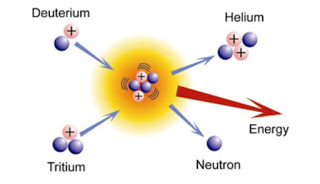
Nuclear fusion is the process in which two or more lighter atoms get fused into each other and form a heavier atom. It releases a large amount of energy as again there is some loss of mass that gets converted into energy as per E=mc2
1H2 + 1H3 → 2He4 + 14.1 MeV
NUCLEAR FUSION: SOURCE OF SUN’S ENERGY
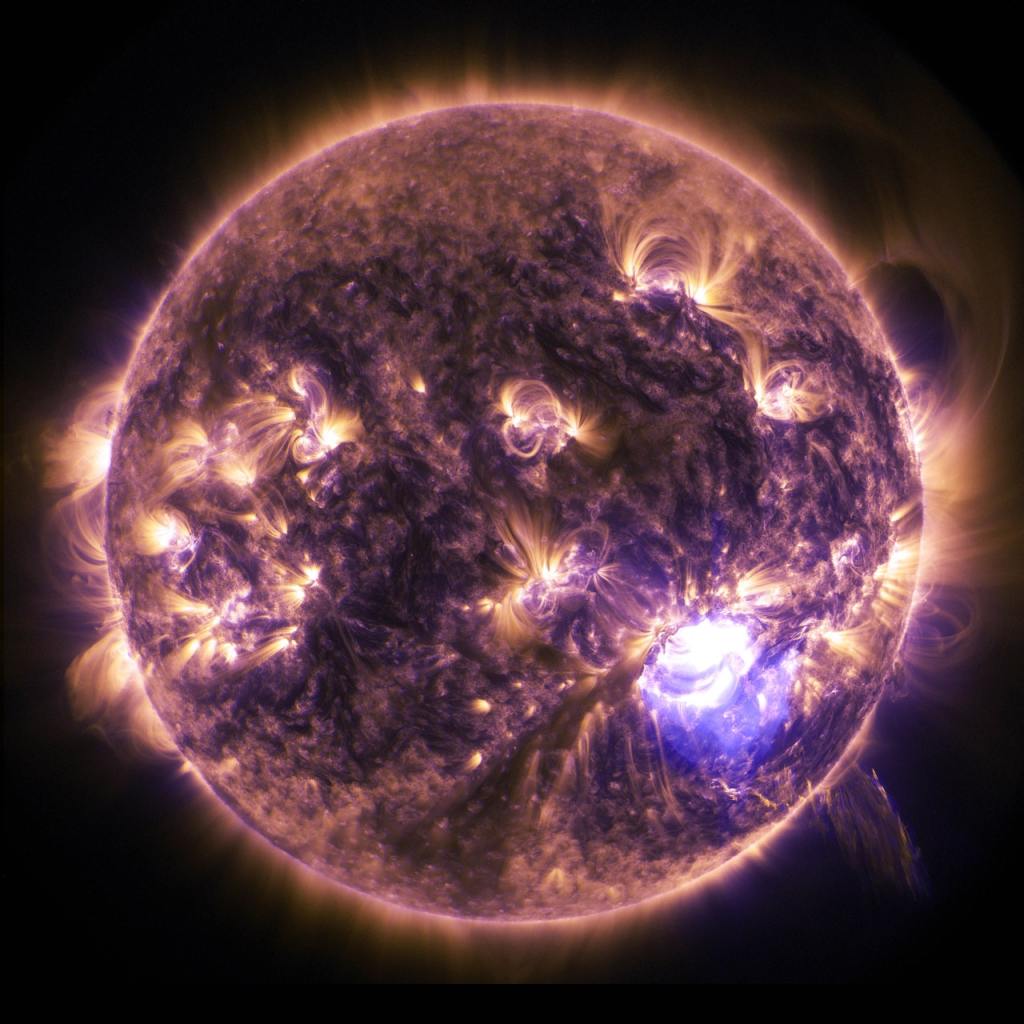
Nuclear Fusion: Source of Sun’s Energy– Yes, you got it right. It is nuclear fusion that is happening at the Sun and gives us all the energy. Hydrogen is continuously getting converted into Helium and other heavier atoms releasing enormous amounts of energy.
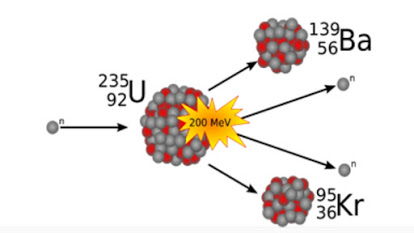
Nuclear fission is the process in which a large nucleus splits into two smaller nuclei with the release of energy. In the process of this division, some mass loss happens and that gets converted into energy as per the famous Mass-Energy equivalence equation given by Albert Einstein, written as,
E= m.c2
E-Energy released during process
m-loss of mass
c- speed of light (3 lakh km/second)
NUCLEAR BOMB
Image below shows the mushroom clouds generated due to nuclear bomb blast over Japan by the U.S. during 2nd World War.
Nuclear Bomb & Nuclear Fission: It is this energy that is released during a nuclear bomb blast. During a nuclear bomb blast, Uranium gets divided into Barium & Krypton due to bombardment of a neutron, releasing enormous amount of energy.
This also released two free neutrons. These free neutrons further blast another Uranium atoms and releasing more energy. And hence, the chain continues releasing huge amount of energy.



 Science-Blogger Curiosity
You must be logged in to post a comment.