Why does the Moon have No Atmosphere?

The mean thermal velocity of molecules of all the gases present in the Earth’s atmosphere is less than the Earth’s escape velocity (11.2 km/sec). Therefore, gases cannot escape from the Earth.
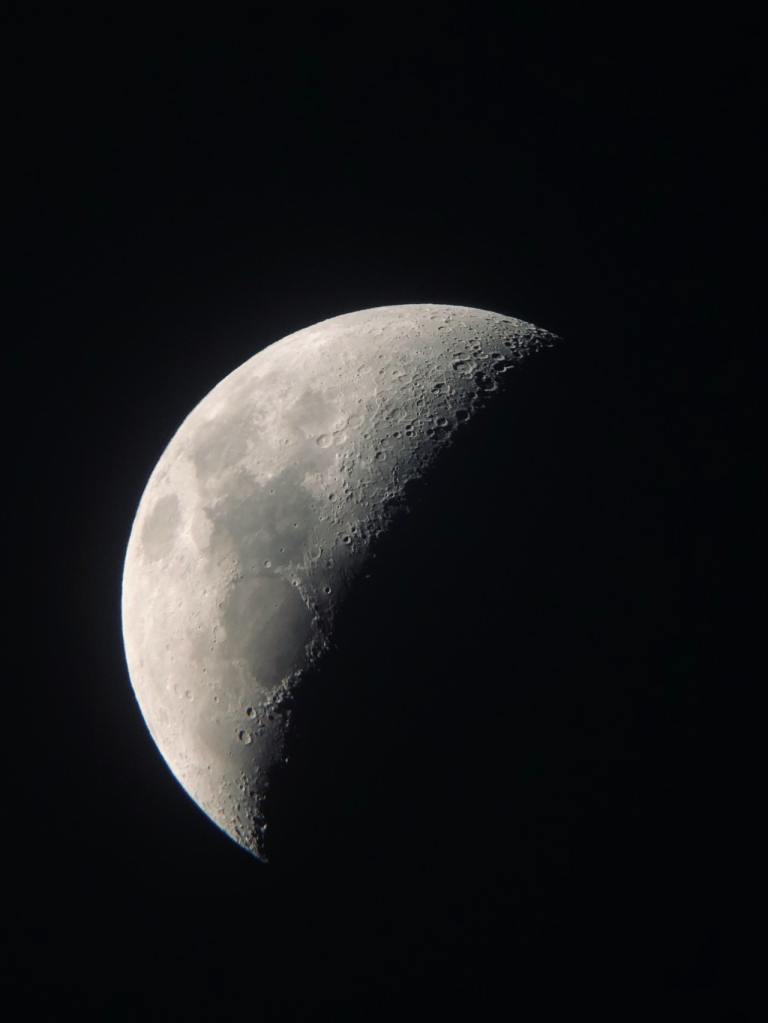
Moon being small in size and mass, gravity is also not so strong on the Moon. What it means actually is that, the value of the escape velocity on the moon is only 2.4 km/sec.

The molecules in all the gases, the mean velocity is more than 2.4 km/sec. Therefore, gases do not stay on the moon and escape from the atmosphere. 

As a result, there is no atmosphere on the moon.
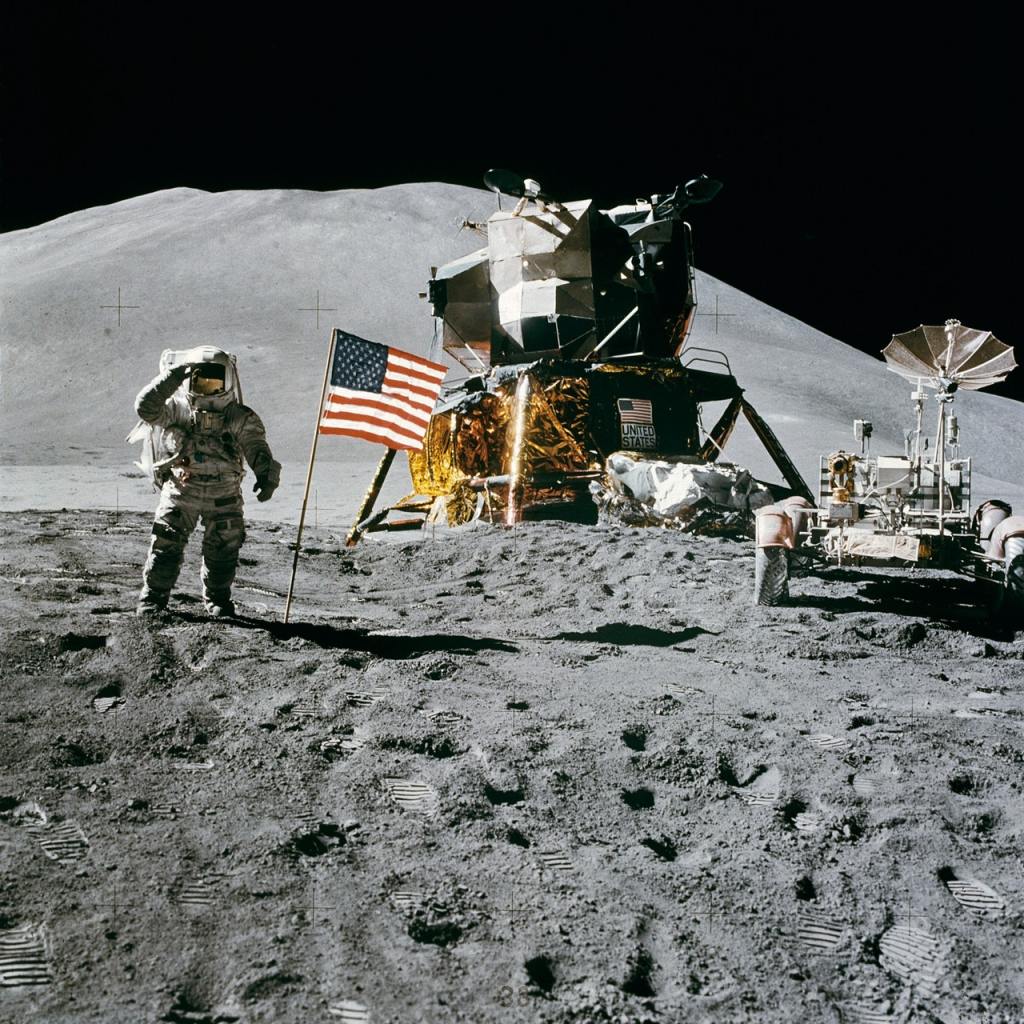
Why can’t an Astronauts hear the voice of the other one while on the moon?

Sound waves unlike the electro-magnetic waves (sun-light)  require a medium for their propagation. There is no air on the Moon. 

“Hence, an Astronaut cannot hear the voice of other one while on the Moon.”

In space suits, communication systems involving a transmitter and receiver is placed. This system works on radio waves which are essentially EMW (Electromagnetic Waves) which can travel through vacuum. 

Hence, using this system, sound signals can be transmitted as radio waves which can be directed as desired.

Why do the Solar and the Moon Eclipses occur ?

Eclipse-A celestial body is called under eclipse with respect to another body when, whole or a fraction of the first body is behind a 3rd body. When this happens the body -1 is not visible partially of fully from body-2.

When this happens with respect to the Sun, the Moon & the Earth, these phenomenon are called, Solar Eclipse & Moon Eclipse w.r.t. the Sun & the Moon respectively when viewed from the Earth.

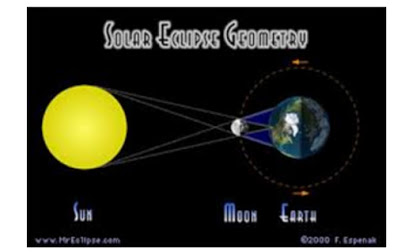
Solar eclipse- This occurs because the Moon and the Sun appear almost the same size. Solar eclipses occur, when the Moon is between Earth and the Sun.

Moon Eclipse-the Moon orbits the Earth once a month, and eclipses happen if it lines up exactly with the Earth and the Sun. Lunar eclipses occur at Full Moon, when Earth is between the Sun and the Moon.

Note:- that Eclipses do not take place every month because the orbits of the Moon and Earth are tilted at an angle. Most of the time, the line- up is not precise enough for an eclipse.

What is a ☄Comet and Where do they come from?

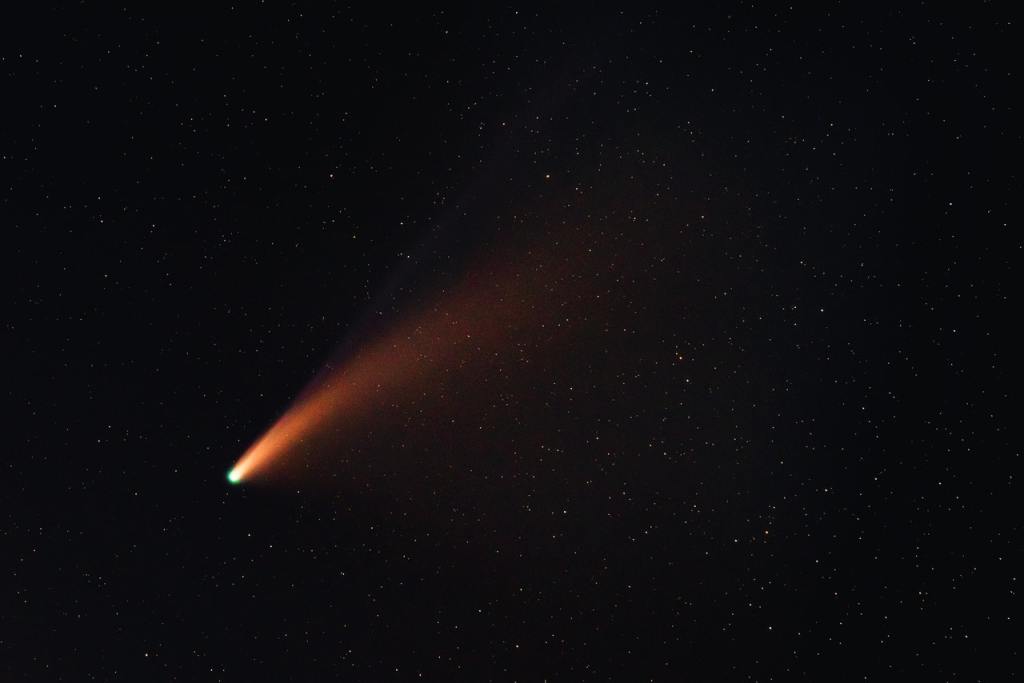
If you are lucky enough, you might have seen a tailed star moving in the sky very fast. These are comets. Comets are celestial bodies which revolve around the Sun. 

Sometimes when they come too close to Earth, due to the earth’s gravity, it ends up falling on the earth.

Outside the orbit of Neptune, there is a very large cluster of comets called the Oort cloud. Occasionally any-body from here gets away from this cloud and starts revolving around the Sun in an elliptical orbit. While orbiting, they at times in the gravitation field of the Earth. 

A comet need not always fall while passing by the Earth. It may simply come closer to Earth and then bypass it at high speeds.

Why do Comets have Tails..!  When a comet enters the gravitational field of earth, due to dense air, it becomes very hot due to drag. The Gaseous elements in the comet start burning and due to less mass (gaseous phase) look like a tail (just like from a rocket).

What do we mean by the term A Light Year?

Because it includes the word “year”, the term light-year is sometimes misinterpreted as a unit of time but actually it is a measurement unit of distance- we mean large, really large distances.

A light year is the distance travelled by the sunlight in 1 year. Mind that speed of light is 3 lakh km/second.  So, how big is a Light Year…!!!  Whhhoaaa..!!

1 light year = 9.4607 × 10¹⁵m ≈ 9.461 trillion km

The light-year is most often used when expressing distances to stars and other distances on a galactic scale.

Why Is Pluto Not A Planet? Why it is removed from planet lists?

Many of us got emotional when we heard the news that Pluto is no more going to be called a Planet.

These used to be 9 planets but now only 8. But, why exactly Pluto was removed from the list of planets! Let us see.

The International Astronomical Union (IAU) has three criteria for a body to be defined as a full-sized planet. These 3 criteria are:

1.      It needs to be in orbit around the Sun – Yes, true for Pluto- check

2.      It needs to have enough gravity to pull itself into a spherical shape – Yes, true again for Pluto- check

3.      It needs to have “cleared the neighborhood” of its orbit – Uh oh. Here’s the rule breaker- Uncheck

According to this 3rd point, Pluto is not a planet.

What does “cleared its neighborhood” mean? As planets form, they become the dominant gravitational body in their orbit in the Solar System. As they interact with other, smaller objects, they either consume them, or sling them away with their gravity. Pluto is only 0.07 times the mass of the other objects in its orbit. The Earth, in comparison, has 1.7 million times the mass of the other objects in its orbit.

How long does it take for the sun light to reach the earth?

Speed of light is 3 million km/second. 
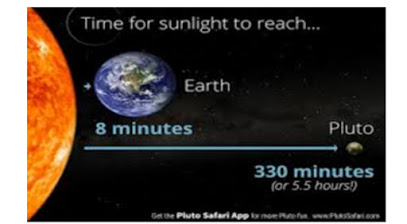
The distance between the earth and the sun is 149.6 million kilometres (that’s 92.95 million miles). Scientists calculate that the average time it takes for light to reach the earth from the sun is 8 minutes and 20 seconds.

At this speed, it takes the sun light about 8 minutes & 20 seconds to reach the Earth after it has been emitted from the sun’s surface.

What do you understand by Escape Velocity?

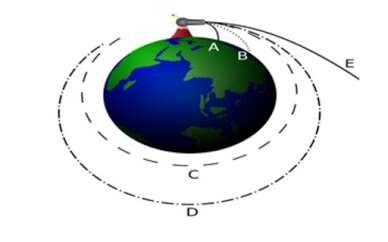
When you throw a stone upwards, the stone returns to the ground after reaching some height due to gravitational force of earth.

 But, if you keep on increasing the speed at which you through the stone, then there comes a time when the stone will not return back to Earth. This special speed is called Escape Velocity with respect to Earth.

Escape velocity is the speed that an object needs to be traveling to break free of a planet or moon’s gravity and leave it without further propulsion. Escape velocity on Earth is 11.2 km/second.

Did you know-A long ago the moon was a part of the Earth !

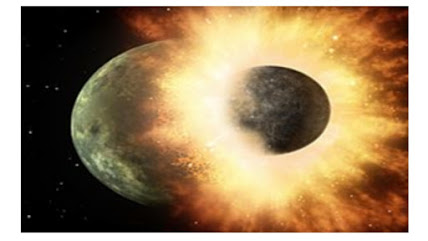
Illustration of a collision between two planetary bodies

How the moon came into existence, there are many theories behind that. But the most approved theory among the scientists is Giant-impact hypothesis, sometimes called Big Splash.

The Giant-impact hypothesis tells that the Moon came into existence with the impact between the Earth and a celestial body (generally called Theia) approximately 4.5 billion years ago. 

That impact made a small piece of Earth fly away into the sky and that small part is nothing but  the Moon.

Theia comes from Greek mythology, under the name of Titan, who was the mother of Selen, goddess of the Moon.

Interesting facts About the Moon.

The beautiful Moon which has romanticized humans across civilizations for thousands of years is unique to all of us. It is a kind of a gift for humans from the nature.

 It is neither a star nor a planet. It is a satellite of Earth and rotates about it.

Let us tell you a few interesting things about the moon.

•        It is a one fourth of size of the earth. The average distance from Moon’s Earth is 38465 km. The diameter of the Moon is approximately 3476 and the radius is 1738 km.

•        The moon revolves around the earth in approximately 27 days 7 hours 43 minutes and 15 seconds and rotates on its axis in the same time, this is the reason that only one part of the Moon appears from the Earth.

•        Lunar eclipse always happens to the full moon when the earth passes between the sun and the moon

•        Its highest mountain (height- 10668 m) is taller than Mount Everest (8848 m).

•        July 1969, Apollo-ll spacecraft landed on the Moon. Neil Armstrong and Edwin Aldrin are the first ones who have walked on the Moon.

•        The moon is as old as the earth is about 460 million years as it was a part of the Earth itself (millions of years ago).