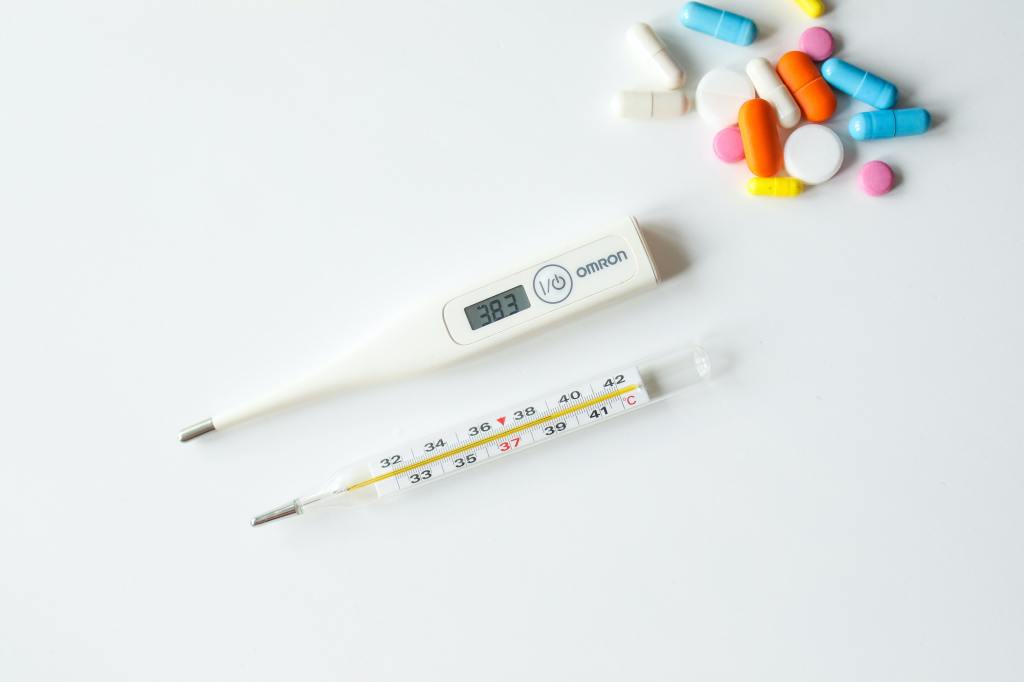
Thermometer works on the principle of Thermal Expansion. All metals expand with increase in temperature & vice versa i.e. decrease in size with decrease in temperature.
In a common thermometer as shown in figure above, in the bottom small bulb, Mercury (a metal) is kept.
It is worth mentioning that Mercury is unique in the sense that i. it is the only metal which is a liquid at room temperature & ii. It coefficient of thermal expansion is pretty high i.e. it the change in volume (or length of a fix area liquid column is very large).
This mercury rises up and down in the thermometer tube with increase & decrease in temperature. The tube is marked with temperature readings and can be read directly.
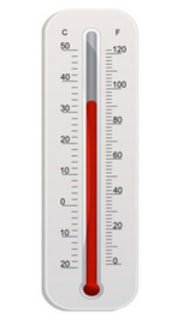
How do we define 10C temperature- Its simple. As a convention it is assumed that the pure water boils at 1000C & gets converted into ice at 00C.
The thermometer is kept in a boiling water. This gives us the mark of 1000C. Again, the thermometer is kept in an ice-water mixture. This gives us the 00C mark.
The intermediate length between these 2 marks is divided into 100 parts. Each partitions corresponds to 10C temp rise or decrease.
X-Raysare a form of electromagnetic radiation, as is visible light, but with some different characteristics.
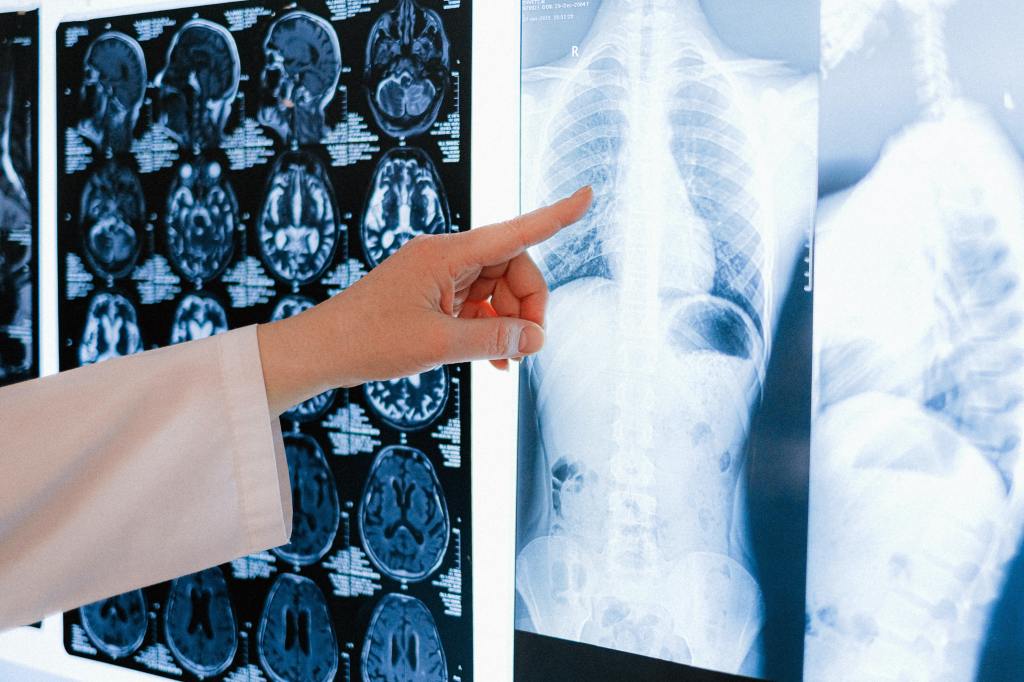
The important characteristic of X-Rays is that these can penetrate or pass through the human body but cannot pass through bones, hard items like bullets etc.
This effect produces shadow-like images of structures such as bones, bullets etc. on a photographic plate. This helps to understand the inner details of body such as presence of foreign hard materials (bullets etc.) or any fracture in the bones.
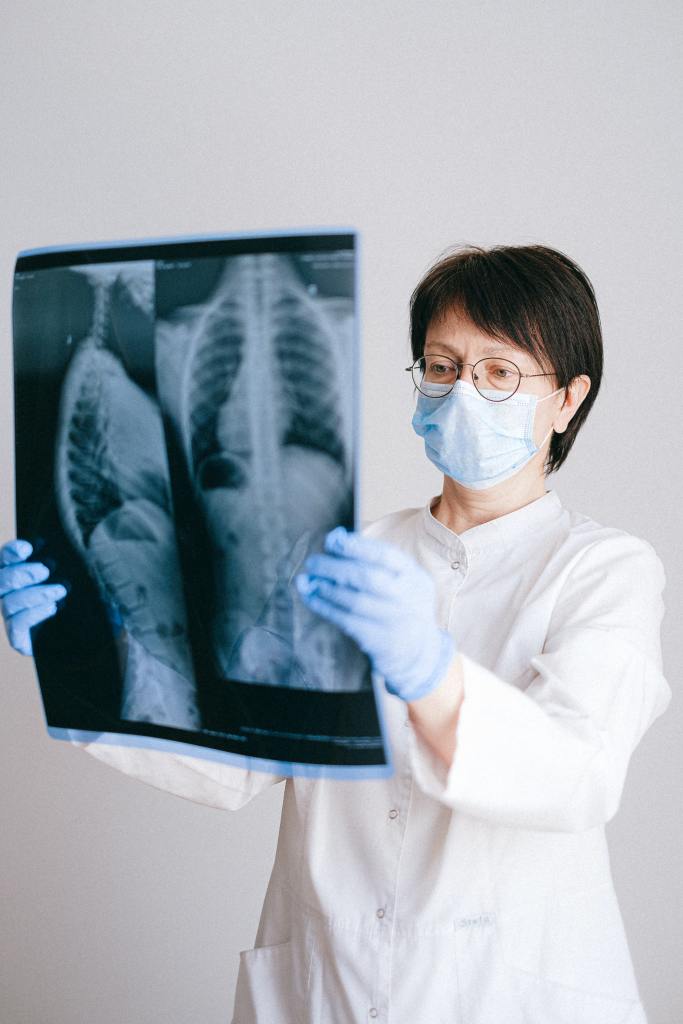
X-rays are a form of electromagnetic radiation, similar to visible light. Unlike light, however, x-rays have higher energy and can pass through most objects, including the body. Medical x-rays are used to generate images of tissues and structures inside the body.
If x-rays travelling through the body also pass through an x-ray detector on the other side of the patient, an image will be formed that represents the “shadows” formed by the objects inside the body.
One type of x-ray detector is photographic film, but there are many other types of detectors that are used to produce digital images. The x-ray images that result from this process are called radiographs.
A video is nothing but a collection of images which are displayed to our eyes continuously with a very short time interval between them.
Let us see what do we mean by it.
When we look at any object, its image is made on retina of human eyes. These images do not get removed from the retina even after removing the object from in front of the eyes.
Due to the same attributes of the eye, the video is produced. Continuous photos are flashed so fast that the effect of the picture is not completely eradicated & this happens so fast that it becomes difficult for us to understand these pictures separately and their mixed effect gives us an impression of being dynamic (video).
“Video production”
Video production is the process of producing video content for TV, home video or the internet. It is the equivalent of filmmaking, but with video recorded either as analog signals on videotape, digitally in video tape or as computer files stored on optical discs, hard drives, SSDs, magnetic tape or memory cards instead of film stock.
There are three stages of video production:- pre-production, production (also known as principal photography), and post-production.
Pre-production involves all of the planning aspects of the video production process before filming begins. This includes scriptwriting, scheduling, logistics, and other administrative duties.
Production is the phase of video production which captures the video content (Electronic moving images) and involves filming the subject(s) of the video.
Post-production is the action of selectively combining those video clips through video editing into a finished product that tells a story or communicates a message in either a live event setting (live production), or after an event has occurred (post-production).
Currently, the majority of video content is captured through electronic media like an SD card for consumer grade cameras, or on solid state storage and flash storage for professional grade cameras. Video content that is distributed digitally on the internet often appears in common formats such as the MPEG container format (.mpeg, .mpg, .mp4), QuickTime (.mov), Audio Video Interleave (.avi), Windows Media Video (.wmv), and DivX (.avi, .divx).
Internet video production
Increasing internet speeds, the transition to digital from physical formats such as tape to file-based media and the availability of cloud-based video services has increased use of the internet to provision services previously delivered on-premise in the context of commercial content creation for example video editing. In some cases the lower costs of equivalent services in the cloud has driven adoption and in others the greater scope for collaboration and time savings.
Many web sites include videos. Although not necessarily produced online, many video production tools allow the production of videos without actually using a physical camera. An example of this is using the YouTube video editor to create a video using pre-existing video content that is held on the platform under Creative Commons license.
Video content is being used in an ever-growing range of contexts, including testimonial videos, web presenter videos, help section videos, interviews, parodies, product demonstrations, training videos, thank you videos, and apology videos.
Marketing videos are made on the basis of the campaign target. Explainer videos are used for explaining a product, commercial videos for introducing a company, sales videos for selling a product, and social media videos for brand awareness.
Individual Internet marketing videos are primarily produced in-house and by small media agencies, while a large volume of videos are produced by big media companies, crowdsourced production marketplaces, or in scalable video production platforms.
Most Internet marketing videos serve the purpose of interacting with the audience.
The two main types of internet marketing videos are:- transactional videos, which aim to sell a product to a customer, and reference videos, which are designed to keep the customer on the site.
Machine Learning is a system that can learn from example through self-improvement and without being explicitly coded by programmer. The breakthrough comes with the idea that a machine can singularly learn from the data (i.e., example) to produce accurate results.
Machine learning combines data with statistical tools to predict an output. This output is then used by corporate to makes actionable insights. Machine learning is closely related to data mining and Bayesian predictive modeling. The machine receives data as input, use an algorithm to formulate answers.
A typical machine learning tasks are to provide a recommendation. For those who have a Netflix account, all recommendations of movies or series are based on the user’s historical data. Tech companies are using unsupervised learning to improve the user experience with personalizing recommendation.
Machine learning is also used for a variety of task like fraud detection, predictive maintenance, portfolio optimization, automatize task and so on.
How does Machine learning work?
Machine learning is the brain where all the learning takes place. The way the machine learns is similar to the human being. Humans learn from experience. The more we know, the more easily we can predict. By analogy, when we face an unknown situation, the likelihood of success is lower than the known situation. Machines are trained the same. To make an accurate prediction, the machine sees an example. When we give the machine a similar example, it can figure out the outcome. However, like a human, if its feed a previously unseen example, the machine has difficulties to predict.
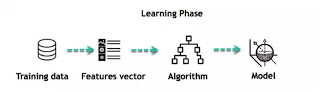
The core objective of machine learning is the learning and inference. First of all, the machine learns through the discovery of patterns. This discovery is made thanks to the data. One crucial part of the data scientist is to choose carefully which data to provide to the machine. The list of attributes used to solve a problem is called a feature vector. You can think of a feature vector as a subset of data that is used to tackle a problem.
The machine uses some fancy algorithms to simplify the reality and transform this discovery into a model. Therefore, the learning stage is used to describe the data and summarize it into a model.
For instance, the machine is trying to understand the relationship between the wage of an individual and the likelihood to go to a fancy restaurant. It turns out the machine finds a positive relationship between wage and going to a high-end restaurant.
Inferring
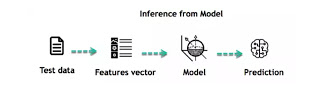
When the model is built, it is possible to test how powerful it is on never-seen-before data. The new data are transformed into a features vector, go through the model and give a prediction. This is all the beautiful part of machine learning. There is no need to update the rules or train again the model. You can use the model previously trained to make inference on new data.
The life of Machine Learning programs is straightforward and can be summarized in the following points:
Define a question
Collect data
Visualize data
Train algorithm
Test the Algorithm
Collect feedback
Refine the algorithm
Loop 4-7 until the results are satisfying
Use the model to make a prediction
Once the algorithm gets good at drawing the right conclusions, it applies that knowledge to new sets of data.
“Machine learning Algorithms and where they are used?”
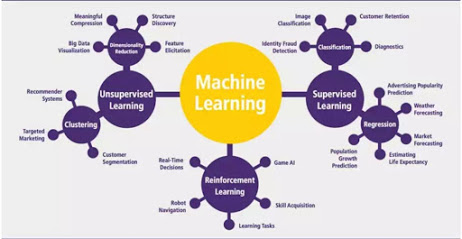
Machine learning can be grouped into two broad learning tasks: Supervised and Unsupervised. There are many other algorithms
Supervised learning
An algorithm uses training data and feedback from humans to learn the relationship of given inputs to a given output. For instance, a practitioner can use marketing expense and weather forecast as input data to predict the sales of cans.
You can use supervised learning when the output data is known. The algorithm will predict new data.
There are two categories of supervised learning:
Classification task
Regression task
Classification
Imagine you want to predict the gender of a customer for a commercial. You will start gathering data on the height, weight, job, salary, purchasing basket, etc. from your customer database. You know the gender of each of your customer, it can only be male or female. The objective of the classifier will be to assign a probability of being a male or a female (i.e., the label) based on the information (i.e., features you have collected). When the model learned how to recognize male or female, you can use new data to make a prediction. For instance, you just got new information from an unknown customer, and you want to know if it is a male or female. If the classifier predicts male = 70%, it means the algorithm is sure at 70% that this customer is a male, and 30% it is a female.
The label can be of two or more classes. The above example has only two classes, but if a classifier needs to predict object, it has dozens of classes (e.g., glass, table, shoes, etc. each object represents a class)
Regression
When the output is a continuous value, the task is a regression. For instance, a financial analyst may need to forecast the value of a stock based on a range of feature like equity, previous stock performances, macroeconomics index. The system will be trained to estimate the price of the stocks with the lowest possible error.
Algorithm Name
Description
Type
Linear regression
Finds a way to correlate each feature to the output to help predict future values.
Regression
Logistic regression
Extension of linear regression that’s used for classification tasks. The output variable 3is binary (e.g., only black or white) rather than continuous (e.g., an infinite list of potential colors)
Classification
Decision tree
Highly interpretable classification or regression model that splits data-feature values into branches at decision nodes (e.g., if a feature is a color, each possible color becomes a new branch) until a final decision output is made
Regression Classification
Naive Bayes
The Bayesian method is a classification method that makes use of the Bayesian theorem. The theorem updates the prior knowledge of an event with the independent probability of each feature that can affect the event.
Regression Classification
Support vector machine
Support Vector Machine, or SVM, is typically used for the classification task. SVM algorithm finds a hyperplane that optimally divided the classes. It is best used with a non-linear solver.
Regression (not very common) Classification
Random forest
The algorithm is built upon a decision tree to improve the accuracy drastically. Random forest generates many times simple decision trees and uses the ‘majority vote’ method to decide on which label to return. For the classification task, the final prediction will be the one with the most vote; while for the regression task, the average prediction of all the trees is the final prediction.
Regression Classification
AdaBoost
Classification or regression technique that uses a multitude of models to come up with a decision but weighs them based on their accuracy in predicting the outcome
Regression Classification
Gradient-boosting trees
Gradient-boosting trees is a state-of-the-art classification/regression technique. It is focusing on the error committed by the previous trees and tries to correct it.
Regression Classification
Unsupervised learning
In unsupervised learning, an algorithm explores input data without being given an explicit output variable (e.g., explores customer demographic data to identify patterns)
You can use it when you do not know how to classify the data, and you want the algorithm to find patterns and classify the data for you
Algorithm
Description
Type
K-means clustering
Puts data into some groups (k) that each contains data with similar characteristics (as determined by the model, not in advance by humans)
Clustering
Gaussian mixture model
A generalization of k-means clustering that provides more flexibility in the size and shape of groups (clusters
Clustering
Hierarchical clustering
Splits clusters along a hierarchical tree to form a classification system.Can be used for Cluster loyalty-card customer
Clustering
Recommender system
Help to define the relevant data for making a recommendation.
Clustering
PCA/T-SNE
Mostly used to decrease the dimensionality of the data. The algorithms reduce the number of features to 3 or 4 vectors with the highest variances.
“How to choose Machine Learning Algorithm”
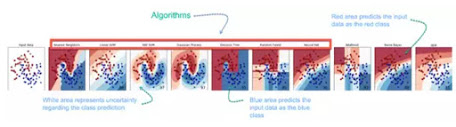
There are plenty of machine learning algorithms. The choice of the algorithm is based on the objective.
In the example below, the task is to predict the type of flower among the three varieties. The predictions are based on the length and the width of the petal. The picture depicts the results of ten different algorithms. The picture on the top left is the dataset. The data is classified into three categories: red, light blue and dark blue. There are some groupings. For instance, from the second image, everything in the upper left belongs to the red category, in the middle part, there is a mixture of uncertainty and light blue while the bottom corresponds to the dark category. The other images show different algorithms and how they try to classified the data.
Challenges and Limitations of Machine learning
The primary challenge of machine learning is the lack of data or the diversity in the dataset. A machine cannot learn if there is no data available. Besides, a dataset with a lack of diversity gives the machine a hard time. A machine needs to have heterogeneity to learn meaningful insight. It is rare that an algorithm can extract information when there are no or few variations. It is recommended to have at least 20 observations per group to help the machine learn. This constraint leads to poor evaluation and prediction.
Application of Machine learning
Augmentation:
Machine learning, which assists humans with their day-to-day tasks, personally or commercially without having complete control of the output. Such machine learning is used in different ways such as Virtual Assistant, Data analysis, software solutions. The primary user is to reduce errors due to human bias.
Automation:
Machine learning, which works entirely autonomously in any field without the need for any human intervention. For example, robots performing the essential process steps in manufacturing plants.
Finance Industry
Machine learning is growing in popularity in the finance industry. Banks are mainly using ML to find patterns inside the data but also to prevent fraud.
Government organization
The government makes use of ML to manage public safety and utilities. Take the example of China with the massive face recognition. The government uses Artificial intelligence to prevent jaywalker.
Healthcare industry
Healthcare was one of the first industry to use machine learning with image detection.
Marketing
Broad use of AI is done in marketing thanks to abundant access to data. Before the age of mass data, researchers develop advanced mathematical tools like Bayesian analysis to estimate the value of a customer. With the boom of data, marketing department relies on AI to optimize the customer relationship and marketing campaign.
Example of application of Machine Learning in Supply Chain
Machine learning gives terrific results for visual pattern recognition, opening up many potential applications in physical inspection and maintenance across the entire supply chain network.
Unsupervised learning can quickly search for comparable patterns in the diverse dataset. In turn, the machine can perform quality inspection throughout the logistics hub, shipment with damage and wear.
For instance, IBM’s Watson platform can determine shipping container damage. Watson combines visual and systems-based data to track, report and make recommendations in real-time.
In past year stock manager relies extensively on the primary method to evaluate and forecast the inventory. When combining big data and machine learning, better forecasting techniques have been implemented (an improvement of 20 to 30 % over traditional forecasting tools). In term of sales, it means an increase of 2 to 3 % due to the potential reduction in inventory costs.
Example of Machine Learning Google Car
For example, everybody knows the Google car. The car is full of lasers on the roof which are telling it where it is regarding the surrounding area. It has radar in the front, which is informing the car of the speed and motion of all the cars around it. It uses all of that data to figure out not only how to drive the car but also to figure out and predict what potential drivers around the car are going to do. What’s impressive is that the car is processing almost a gigabyte a second of data.
Machine Learning vs Deep Learning: What’s the Difference?
AI has three different levels:
Narrow AI: A artificial intelligence is said to be narrow when the machine can perform a specific task better than a human. The current research of AI is here now
General AI: An artificial intelligence reaches the general state when it can perform any intellectual task with the same accuracy level as a human would
Active AI: An AI is active when it can beat humans in many tasks
What is ML?
Machine learning is the best tool so far to analyze, understand and identify a pattern in the data. One of the main ideas behind machine learning is that the computer can be trained to automate tasks that would be exhaustive or impossible for a human being. The clear breach from the traditional analysis is that machine learning can take decisions with minimal human intervention.
Machine learning uses data to feed an algorithm that can understand the relationship between the input and the output. When the machine finished learning, it can predict the value or the class of new data point.
What is Deep Learning?
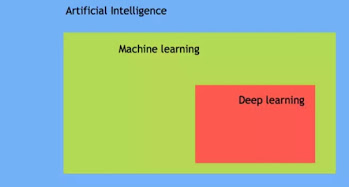
Deep learning is a computer software that mimics the network of neurons in a brain. It is a subset of machine learning and is called deep learning because it makes use of deep neural networks. The machine uses different layers to learn from the data. The depth of the model is represented by the number of layers in the model. Deep learning is the new state of the art in term of AI. In deep learning, the learning phase is done through a neural network. A neural network is an architecture where the layers are stacked on top of each other
Machine Learning Process
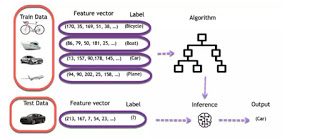
Imagine you are meant to build a program that recognizes objects. To train the model, you will use a classifier. A classifier uses the features of an object to try identifying the class it belongs to.
In the example, the classifier will be trained to detect if the image is a:
Bicycle
Boat
Car
Plane
The four objects above are the class the classifier has to recognize. To construct a classifier, you need to have some data as input and assigns a label to it. The algorithm will take these data, find a pattern and then classify it in the corresponding class.
This task is called supervised learning. In supervised learning, the training data you feed to the algorithm includes a label.
Training an algorithm requires to follow a few standard steps:
Collect the data
Train the classifier
Make predictions
The first step is necessary, choosing the right data will make the algorithm success or a failure. The data you choose to train the model is called a feature. In the object example, the features are the pixels of the images.
Each image is a row in the data while each pixel is a column. If your image is a 28×28 size, the dataset contains 784 columns (28×28). In the picture below, each picture has been transformed into a feature vector. The label tells the computer what object is in the image.
The objective is to use these training data to classify the type of object. The first step consists of creating the feature columns. Then, the second step involves choosing an algorithm to train the model. When the training is done, the model will predict what picture corresponds to what object.
After that, it is easy to use the model to predict new images. For each new image feeds into the model, the machine will predict the class it belongs to. For example, an entirely new image without a label is going through the model. For a human being, it is trivial to visualize the image as a car. The machine uses its previous knowledge to predict as well the image is a car.
Deep Learning Process
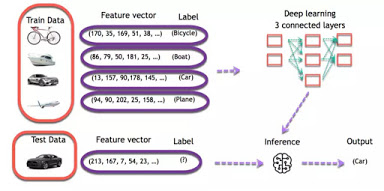
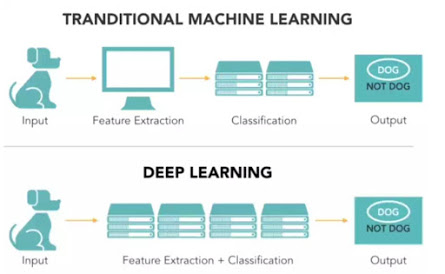
In deep learning, the learning phase is done through a neural network. A neural network is an architecture where the layers are stacked on top of each other.
Consider the same image example above. The training set would be fed to a neural network
Each input goes into a neuron and is multiplied by a weight. The result of the multiplication flows to the next layer and become the input. This process is repeated for each layer of the network. The final layer is named the output layer; it provides an actual value for the regression task and a probability of each class for the classification task. The neural network uses a mathematical algorithm to update the weights of all the neurons. The neural network is fully trained when the value of the weights gives an output close to the reality. For instance, a well-trained neural network can recognize the object on a picture with higher accuracy than the traditional neural net.
Automate Feature Extraction using DL
A dataset can contain a dozen to hundreds of features. The system will learn from the relevance of these features. However, not all features are meaningful for the algorithm. A crucial part of machine learning is to find a relevant set of features to make the system learns something.
One way to perform this part in machine learning is to use feature extraction. Feature extraction combines existing features to create a more relevant set of features. It can be done with PCA, T-SNE or any other dimensionality reduction algorithms.
For example, an image processing, the practitioner needs to extract the feature manually in the image like the eyes, the nose, lips and so on. Those extracted features are feed to the classification model.
Deep learning solves this issue, especially for a convolutional neural network. The first layer of a neural network will learn small details from the picture; the next layers will combine the previous knowledge to make more complex information. In the convolutional neural network, the feature extraction is done with the use of the filter. The network applies a filter to the picture to see if there is a match, i.e., the shape of the feature is identical to a part of the image. If there is a match, the network will use this filter. The process of feature extraction is therefore done automatically.
Difference between Machine Learning and Deep Learning
Machine Learning
Deep Learning
Data Dependencies
Excellent performances on a small/medium dataset
Excellent performance on a big dataset
Hardware dependencies
Work on a low-end machine.
Requires powerful machine, preferably with GPU: DL performs a significant amount of matrix multiplication
Feature engineering
Need to understand the features that represent the data
No need to understand the best feature that represents the data
Execution time
From few minutes to hours
Up to weeks. Neural Network needs to compute a significant number of weights
Interpretability
Some algorithms are easy to interpret (logistic, decision tree), some are almost impossible (SVM, XGBoost)
Difficult to impossible
When to use ML or DL?
In the table below, we summarize the difference between machine learning and deep learning.
Machine learning
Deep learning
Training dataset
Small
Large
Choose features
Yes
No
Number of algorithms
Many
Few
Training time
Short
Long
With machine learning, you need fewer data to train the algorithm than deep learning. Deep learning requires an extensive and diverse set of data to identify the underlying structure. Besides, machine learning provides a faster-trained model. Most advanced deep learning architecture can take days to a week to train. The advantage of deep learning over machine learning is it is highly accurate. You do not need to understand what features are the best representation of the data; the neural network learned how to select critical features. In machine learning, you need to choose for yourself what features to include in the model.
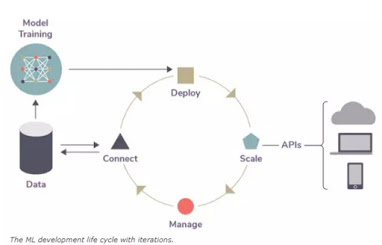
“The Machine Learning Life Cycle – 5 Challenges for DevOps”
Machine learning is fundamentally different from traditional software development applications and requires its own, unique process: the ML development life cycle.
More and more companies are deciding to build their own, internal ML platforms and are starting down the road of the ML development life cycle. Doing so, however, is difficult and requires much coordination and careful planning. In the end, though, companies are able to control their own ML futures and keep their data secure.
After years of helping companies achieve this goal, we have identified five challenges every organization should keep in mind when they build infrastructure to support ML development.
Heterogeneity
Depending on the ML use case, a data scientist might choose to build a model in Python, R, or Scala and use an entirely different language for a second model. What’s more, within a given language, there are numerous frameworks and toolkits available. TensorFlow, PyTorch, and Scikit-learn all work with Python, but each is tuned for specific types of operations, and each outputs a slightly different type of model.
ML–enabled applications typically call on a pipeline of interconnected models, often written by different teams using different languages and frameworks.
Iteration
In machine learning, your code is only part of a larger ecosystem—the interaction of models with live, often unpredictable data. But interactions with new data can introduce model drift and affect accuracy, requiring constant model tuning and retraining.
As such, ML iterations are typically more frequent than traditional app development workflows, requiring a greater degree of agility from DevOps tools and staff for versioning and other operational processes. This can drastically increase work time needed to complete tasks.
Infrastructure
Machine learning is all about selecting the right tool for a given job. But selecting infrastructure for ML is a complicated endeavor, made so by a rapidly evolving stack of data science tools, a variety of processors available for ML workloads, and the number of advances in cloud-specific scaling and management.
To make an informed choice, you should first identify project scope and parameters. The model-training process, for example, typically involves multiple iterations of the following:
· an intensive compute cycle
· a fixed, inelastic load
· a single user
· concurrent experiments on a single model
After deployment and scale, ML models from several teams enter a shared production environment characterized by:
· short, unpredictable compute bursts
· elastic scaling
· many users calling many models simultaneously
Operations teams must be able to support both of these very different environments on an ongoing basis. Selecting an infrastructure that can handle both workloads would be a wise choice.
The K in vitamin K is derived from the German word koagulation. Vitamin K is a fat-soluble vitamin which plays a vital role in blood clotting. There are several forms of vitamin K, one synthesized by plants, one synthesized by animals (including humans) and a large range of types synthesized by bacteria in the small intestine of humans. Vitamin K is one of the fat-soluble vitamins. It helps with blood clotting. The major source of vitamin K is found in green plants. This form is called phylloquinone.
Functions Vitamin K delivers the required coenzyme for a vitamin K dependent carboxylation of amino acids. It is essential for the provision of proteins that play a role in blood clotting. Therefore, it is clear that deficiency causes bleeding disorders, such as haemorrhaging (uncontrolled bleeding). This may cause nose bleeds, blood in the urine, or extremely heavy menstrual bleeding.
In infants vitamin K deficiency may even result in internal haemorrhaging of the skull. A vitamin K deficiency is fairly uncommon in healthy adults, because bacteria in the intestines synthesize the vitamin. It may however occur in individuals that take medicinal vitamin K antagonists.
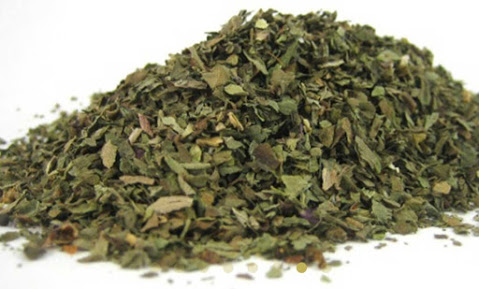
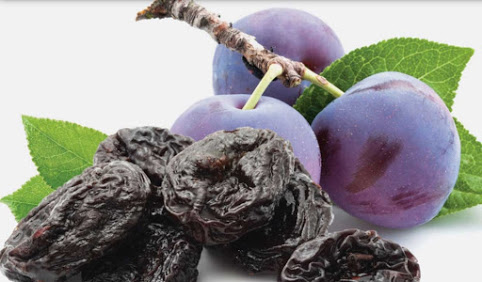
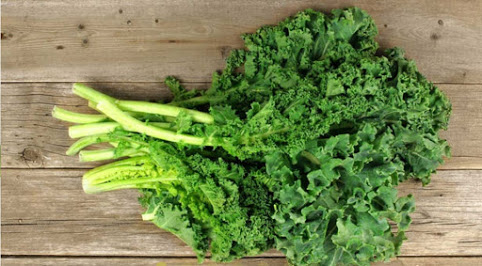
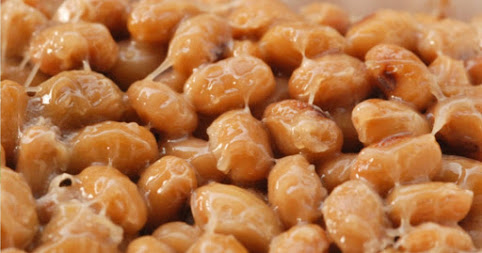
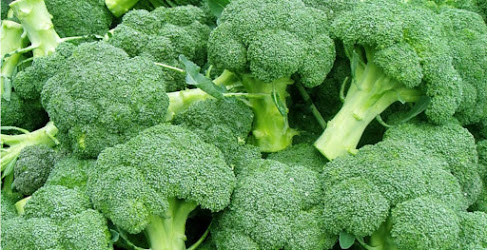
Rich in Foods 1) Green Leafy Vegetables (Kale) ½ c: 444 mcg (over 100% DV) 2) Natto (fermented soy) 2 oz: 500 mcg (over 100% DV) 3) Spring onions (Scallions) ½ c: 103 mcg (over 100% DV) 4) Brussels Sprouts 2 c: 78 mcg (98% DV) 5)Cabbage ½ cup: 82 mcg (over 100% DV) 6) Broccoli ½ c: 46 mcg (58% DV) 7) Dairy (fermented) ½ c: 10 mcg (10% DV) 8) Prunes 2 c: 52 mcg (65% DV) 9) Cucumbers 1 medium: 49 mcg (61% DV) 10) Dried basil 1 Tbsp: 36 mcg (45% DV) etc..
Overdose Vitamin K toxicity is typically seen in formula-fed infants or those receiving synthetic vitamin K-3 (menadione) injections. Because of its toxicity, menadione is no longer used for treatment of vitamin K deficiency. The effects of vitamin K toxicity can include jaundice in newborns, hemolytic anemia, and hyperbilirubinemia. Toxicity also blocks the effects of oral anticoagulants.
Deficiency
vitamin K Deficiency of Vitamin K leads heavy menstrual bleeding, gum bleeding, nose bleeding, Hardening of the arteries or calcium-related problems are the other common signs of vitamin K deficiency.
Vitamin E also called as Tocopherols, Tocotrienols. The term “vitamin E” describes eight different compounds. Alpha-tocopherol is the most active one in humans. Vitamin E is an antioxidant. It may help protect your cells from damage.
Functions
Vitamin E is used as treatment for a variety of degenerative diseases, including: hardening of the arteries, high blood,pressure,heart disease, cancer. It also Balances Cholesterol, Fights Free Radicals and Prevents Disease Development, Repairs Damaged Skin, Thickens Hair, Balances Hormones, Helps PMS Symptoms, Improves Vision, Helps People with Alzheimer’s Disease, Improves Effects of Medical Treatments, Improves Physical Endurance and Muscle Strength.
Overdoses of vitamin E are rare. It’s virtually impossible to overdose through diet alone. If you take more than the tolerable upper intake level for your age, you might risk blurred vision, weakness, dizziness, nausea and diarrhea. If you’re also taking an anticoagulant medication, such as warfarin, bleeding can result.
Deficiency
vitamin E Low levels of vitamin E can cause many digestive system problems, which will lead to poor absorption of nutrients from the digestive tract.This leads to diseases in pancreas, liver, gall bladder, Nervous system, Dry hair or loss of hair.
Vitamin D is a fat-soluble vitamin, often referred to as the “sunshine vitamin”. Vitamin D is important for good overall health and strong and healthy bones, It’s also an important factor in making sure your muscles, heart, lungs and brain work well and that your body can fight infection. Your body can make its own vitamin D from sunlight. You can also get vitamin D from supplements and a very small amount comes from a few foods you eat.
Functions
Vitamin D is produced when your skin is exposed to sunshine. The amount of vitamin D that your skin makes depends on such factors as the season (i.e., there’s usually less sunshine in winter months), the time of day (the sun’s rays are most powerful between 10 am and 3 pm), the amount of cloud cover and air pollution, and where you live (cities near the equator have higher UV levels). It’s the UV (ultraviolet) light in sunlight that causes your skin to make vitamin D.
Rich Foods
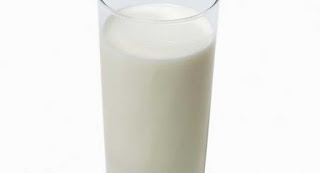
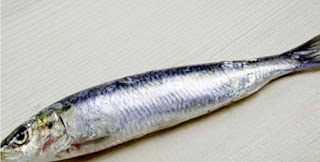
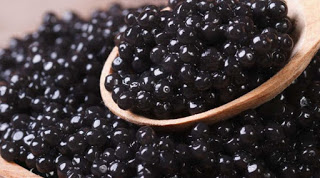
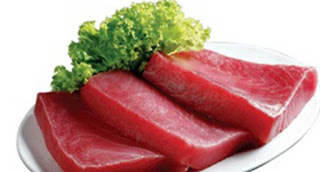
1) sunlight Promotes vitamin D synthesis from cholesterol in the skin. 2) Cod liver oil 1 tsp: 440 IU (over 100% DV) 3) Sardines (fish) 3 ounces: 164 IU (41% DV) 4) Salmon (fish) 3 ounces: 400 IU (100% DV) 5) Mackerel (fish) 3 ounces: 400 IU (100% DV) 6) Tuna (fish) 3 ounces: 228 IU (57% DV) 7) Raw Milk 1 cup: 98 IU (24% DV) 8) Caviar 1 oz: 33 IU (8% DV) 9) Eggs 1 large: 41 IU (10% DV) 10) Mushrooms 1 cup: 2 IU (1% DV) etc..
Deficiency
vitamin D Deficiency of vitamin D leads Rheumatoid arthritis, Prostate cancer, Heart disease Rickets in childrens, Osteomalacia in adults.
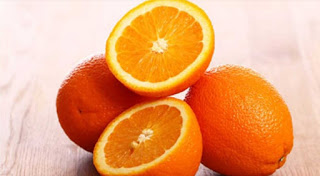
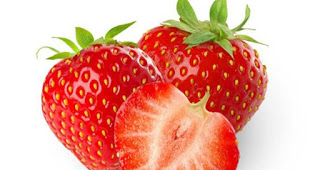
Vitamin C, also known as Ascorbic Acid, is a water-soluble vitamin. It is essential for normal body functioning. Humans must obtain vitamin C trough their diet. Other mammals have the opportunity to produce their own vitamin C supply. Vitamin C is a vitamin found in various foods and sold as a dietary supplement. It is used to prevent and treat scurvy. Vitamin C is an essential nutrient involved in the repair of tissue and the enzymatic production of certain neurotransmitters.
Functions
Vitamin C is need for the growth and repair of tissues in all parts of your body. It helps the body make collagen, an important protein used to make skin, cartilage, tendons, ligaments, and blood vessels. Vitamin C is needed for healing wounds, and for repairing and maintaining bones and teeth. It also helps the body absorb iron from nonheme sources.
Overdosing on vitamin C leads to: Diarrhea Nausea Vomiting Heartburn Abdominal bloating and cramps Headache Insomnia Kidneys stones
Deficiency
C Symptoms of vitamin C deficiency includes: Dry skin, Splitting hair, Swelling and discoloration of your gums, Sudden and unexpected bleeding from your gums, Nosebleeds, Poor healing of wounds, Problems fighting infections.
Vitamin B9, also known as folic acid, serves as a coenzyme during the creation of DNA. This vitamin is also very important to the growth and reproduction of all body cells, including red blood cells. Vitamin B9 works with vitamins B6 and B12 and other nutrients to control blood levels of the amino acid homocysteine. Folate, also known as vitamin B₉ and folacin, is one of the B vitamins. Manufactured folic acid, which is converted into folate by the body, is used as a dietary supplement and in food fortification as it is more stable during processing and storage.
Functions
Formation of red blood cells. Creation of genetic material. Promotes a healthy pregnancy by regulating the nervous system development of the fetus. Helps treat anemic patients resulting from folic acid deficiency. Functions to metabolize proteins. Cervical dysplasia may be reduced.
Rich Foods
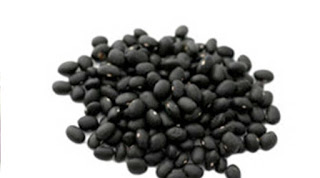
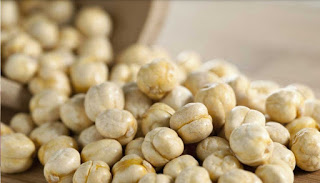
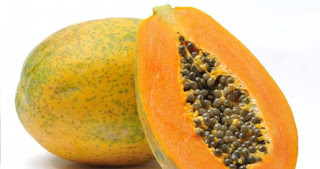
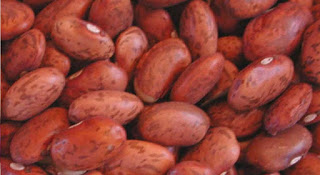
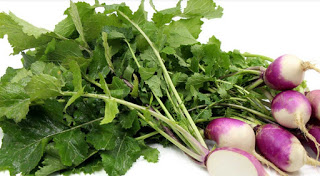
Spinach: 1 cup-263 mcg 65% Collard Greens: 1 cup- 177 mcg 44% Turnip Greens: 1 cup- 170 mcg 42% Papaya: 1 Papaya- 115 mcg 29% Lentils: 1 cup-358 mcg 90% Pinto Beans: 1 cup- 294 mcg 74% Garbanzo Beans: 1 cup- 282 mcg 71% Black Beans: 1 cup-256 mcg 64% Navy Beans: 1 cup-254 mcg 64% Kidney Beans: 1 cup-229 mcg 57% Lima Beans: 1 cup- 156 mcg 39% Avocado: 1 cup- mcg 28%etc..
Overdose
In large doses, the following may occur: Loss of appetite, Nausea, Flatulence, Abdominal distension, May produce folacin crystals in kidney.
Deficiency
B9 Deficiency of vitamin B9 leads to Poor growth, Tongue inflammation, Gingivitis Loss of appetite, Shortness of breath, Diarrhea, Irritability, Forgetfulness, Mental sluggishness.
Vitamin B7, more commonly known as biotin, is a water-soluble nutrient that is part of the B vitamin family. B vitamins help support adrenal function, help calm and maintain a healthy nervous system, and are necessary for key metabolic processes. Biotin is essential for the metabolism of carbohydrate and fat.
Functions
Biotin has vital metabolic functions. Without biotin as a co-factor, many enzymes do not work properly, and serious complications can occur, including varied diseases of the skin, intestinal tract, and nervous system. Biotin can help address high blood glucose levels in people with type 2 diabetes, and may be helpful in maintaining healthy hair and nails, decreasing insulin resistance and improving glucose tolerance, and possibly preventing birth defects. It plays a role in energy metabolism, and has been used to treat alopecia, cancer, Crohn’s disease, hair loss, Parkinson’s disease, peripheral neuropathy, Rett syndrome, seborrheic dermatitis, and vaginal candidiasis.
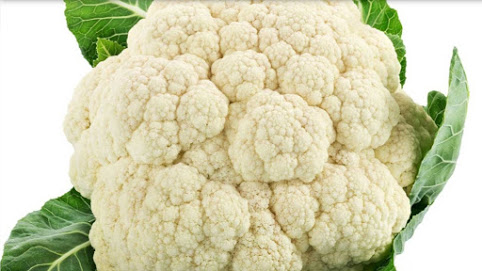
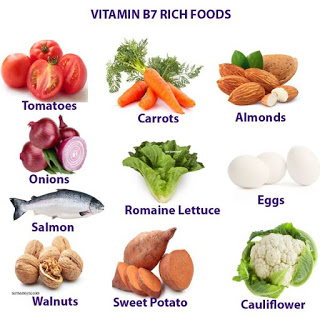
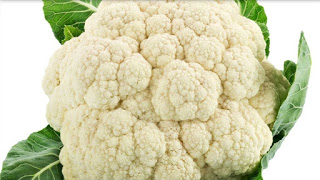
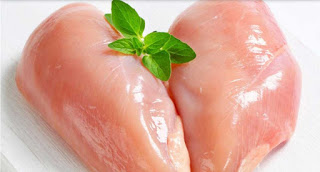
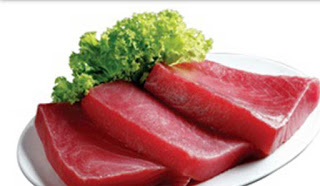
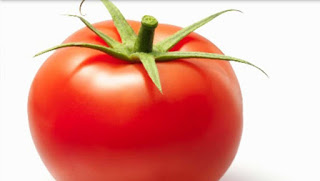
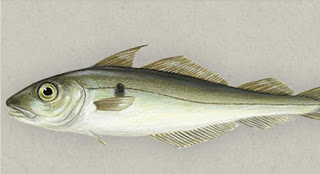
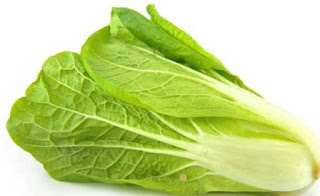
Rich Foods Tomatoes, Almonds, Eggs, Onions, Carrots, Romaine-Lettuce, Cauliflower, meat livers, Beef, chicken, and fish like salmon, sardines, haddock, and tuna
Overdose Vitamin B7 is a water-soluble vitamin, which means that any excess is excreted in the urine and faeces.
Symptoms
Symptoms of vitamin B7 overdose include an increased urge to urinate, abnormal sweating frequency; and rapid nail and hair growth. A condition called eosinophilic pleuropericardial effusion may result when excess vitamin B7 is ingested along with vitamin B5.
Deficiency
B7 Deficiency of vitamin B7 leads to Anemia, loss of appetite, nausea, dermatitis Glossitis, depression, hallucinations, muscle pains.












 Science-Blogger Curiosity
You must be logged in to post a comment.