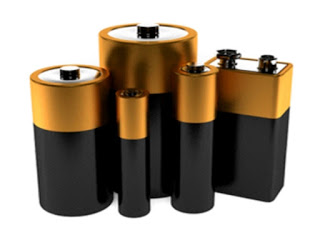
A dry cell is a type of electrochemical cell that is used in low power portable electrical-devices (example transistor, radio, torch, calculator, etc.).
In order to understand the answer of the present question, we need to understand a little bit about the working mechanism of a dry cell. Energy is formed due to chemical reaction in the dry cell.
In a dry cell, there are 2 rods, one rod is anode (positive) and the other rod is cathode (negative). Following reaction occurs in a cell.
Zn + 2MnO2 + 2NH4 ➜ Mn2O3 + H2O + Zn2 + 2NH3
Due to these reactions, chemical energy is converted into electrical energy. This energy then flows through the outer circuit to the battery-connected device.
Why cells do not work after some time if not in use for long –
In the dry cell, for anode carbon rod is used while for cathode zinc rod is used.
Zinc is not pure, it contains impurities of iron, carbon, etc., which act as a small local anodes. This is a kind of short circuit which is formed inside the cell. These reactions take place even when the cell is not in use. This caused the Zinc to get exhausted. Therefore, the cell slowly dies out.
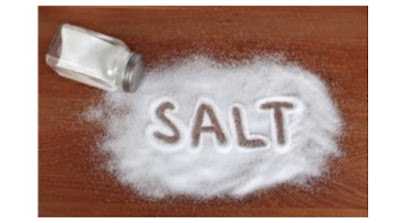
We buy iodized salt from the market. But, how to confirm that there is iodine in salt! We are going to tell a simple home test for this.
Put the starch from washing solution in the salt. If the color turns blue, then there is iodine present in salt otherwise not.
It is important to have iodine in salt in our diet because iodine is essential for the synthesis of a hormone called Thyroxin. Thyroxin is a very important hormone. This hormone plays a very important role in human metabolism.
Apart from this, for development of body and brain iodine is very important.
A gas detector is a device that detects the presence of gases in an area, often as part of a safety system. A gas detector can sound an alarm to operators in the area where the leak is occurring, giving them the opportunity to leave.
This type of device is important because there are many gases that can be harmful to organic life, such as humans or animals.
Gas detectors can be used to detect combustible, flammable and toxic gases, and oxygen depletion. This type of device is used widely in industry and can be found in locations, such as on oil rigs, to monitor manufacturing processes and emerging technologies such as photovoltaic. They may be used in firefighting.
Gas leak detection is the process of identifying potentially hazardous gas leaks by sensors. Additionally a visual identification can be done using a thermal camera These sensors usually employ an audible alarm to alert people when a dangerous gas has been detected.
Exposure to toxic gases can also occur in operations such as painting, fumigation, fuel filling, construction, excavation of contaminated soils, landfill operations, entering confined spaces, etc.
Common sensors include combustible gas sensors, photoionization detectors, infrared point sensors, ultrasonic sensors, electrochemical gas sensors, and metal-oxide-semiconductor sensors (MOS sensors).
More recently, infrared imaging sensors have come into use. All of these sensors are used for a wide range of applications and can be found in industrial plants, refineries, pharmaceutical manufacturing, fumigation facilities, paper pulp mills, aircraft and shipbuilding facilities, hazmat operations, waste-water treatment facilities, vehicles, indoor air quality testing and homes.
The instrument giving the information of the contaminated gas in the mines is based on the properties of gas diffusion.
The tendency of gases to mix and getting homogenized over a period of time, is called diffusion. Due to this property of diffusion, the contamination of the gases in the mines is detected.
Diffusion – The process of forming a in form mixture of two or more gases together with one another is called diffusion.
Graham’s law of diffusion-
Based on experiments, Thomas Graham found that the rate of the diffusion of a gas is inversely proportional to the square root of the mass of its particles. It can be written in the form of formula-
These substances are called sublimatory substances and this process of conversion is known as sublimation.
The molecules of these substances are held together by weak force, even weaker than ice molecules. Therefore when heated in a crucible, instead of converting into liquid form, they directly evaporate without melting.
Sublimation: Sublimation is the phase transition of a substance directly from the solid to the gas phase without passing through the intermediate liquid phase.
It is possible to get hold of a test tube in which water is boiling. For this, the test tube is heated at the top side and not at the bottom. The heated water is lighter and stays at the top while there still is colder water at the bottom of test tube.
That’s why we can hold the test tube comfortably.
This answer points out a concept that hot water rises up. This is just like the case of air in which hot air gets up and cools down. But the question arises that why do the water or air rise above when heated? Why not go down! We get these answers from Science.
Every molecule is made from atoms, whether it is fluid or gas or solid. These molecules or atoms are always in motion (oscillatory motion) i.e. they have kinetic energy. When heated, the internal energy of these molecules increases and they start to oscillate with larger amplitudes.
This causes these materials to expand as Expansion essentially means, low density –> low density means relative lightness –>motion towards topside (heavy gas or fluid move downwards due to gravity.)
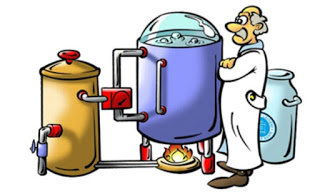
Pasteurization: is process of heat processing a liquid or a food to kill pathogenic bacteria and thereby making the food safe for eating.
The use of pasteurization to kill pathogenic bacteria has helped reduce the transmission of diseases, such as typhoid fever, tuberculosis, scarlet fever, polio, and dysentery.
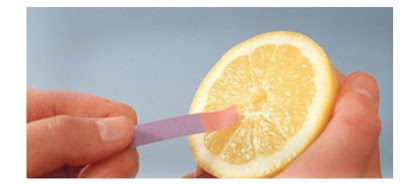
Litmus paper is actually used to identify acids and base in laboratories and industrial institutes. It is a simple paper that contains a mixture of water soluble dyes, which are extracted from lichens. Often it is used as an indicator for acidity of a solution.
Blue litmus paper turns red/pink under acidic conditions and when dipped in juice of lemon it turns pink because lemon juice is acidic as it contains citrus acid.
Gold and silver are noble metals. These metals are malleable and ductile and also do not get affected by air, water, and acid or alkaline for a long time. Due to this luster properties (shine) persists for a longer times. Therefore these metals are used to make ornaments.
In this answer, two properties of substances have been identified, malleability& ductility. Let us talk about these a little bit more.
Malleability: Malleability is a substance’s ability to deform under pressure (compressive stress). If malleable, a material may be flattened into thin sheets by hammering or rolling.
Ductility: Ductility is a solid material’s ability to deform under tensile stress; this is often characterized by the material’s ability to be stretched into a wire.
Almost all the things of our daily life are connected to Science. If we start to understand this science then our understanding and knowledge both grow. This is also an example of one such incident.
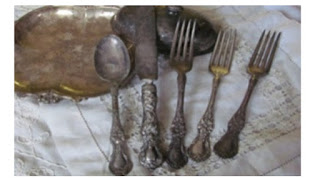
Silver Sulphide and Hydrogen gas are formed by reaction of Silver with Hydrogen present in the air. This Silver Sulphide gets deposited over the pots. The color of Silver Sulphide is black which appears to be deposited over silver.
Corrosion: Corrosion is a natural process in which a metal is converted into a more chemically-stable form, such as its oxide, hydroxide, or sulfide. It is the gradual destruction of materials (usually metals) by chemical and/or electrochemical reaction with their environment.
This is a wonderful example of Chemistry. Let’s see why this happens.
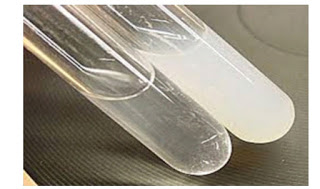
When we blow in a test tube filled with lime water, it color turns milky. It happens due to the reaction of carbon dioxide (CO2) gas which comes along with our breath to lime water. This reaction forms insoluble calcium carbonate (CaCO3). Due to presence of white color Calcium Carbonate the color of lime water becomes milky.
But if we keep blowing into test tube, due to excess amount of CO2, further reaction occurs in which the CaCO3 formed further gets converted into Calcium-bi-Carbonate. This product is soluble in water and hence, the milky color vanishes.
Soluble substances– Substances which dissolve in water or any other liquid. For example, sugar, salt etc. get dissolved in water. Note that not all compounds get dissolved in water.
Insoluble substances– Substances which do not dissolve in water or any other liquid. For example, oil and water do not mix.



 Science-Blogger Curiosity
You must be logged in to post a comment.