
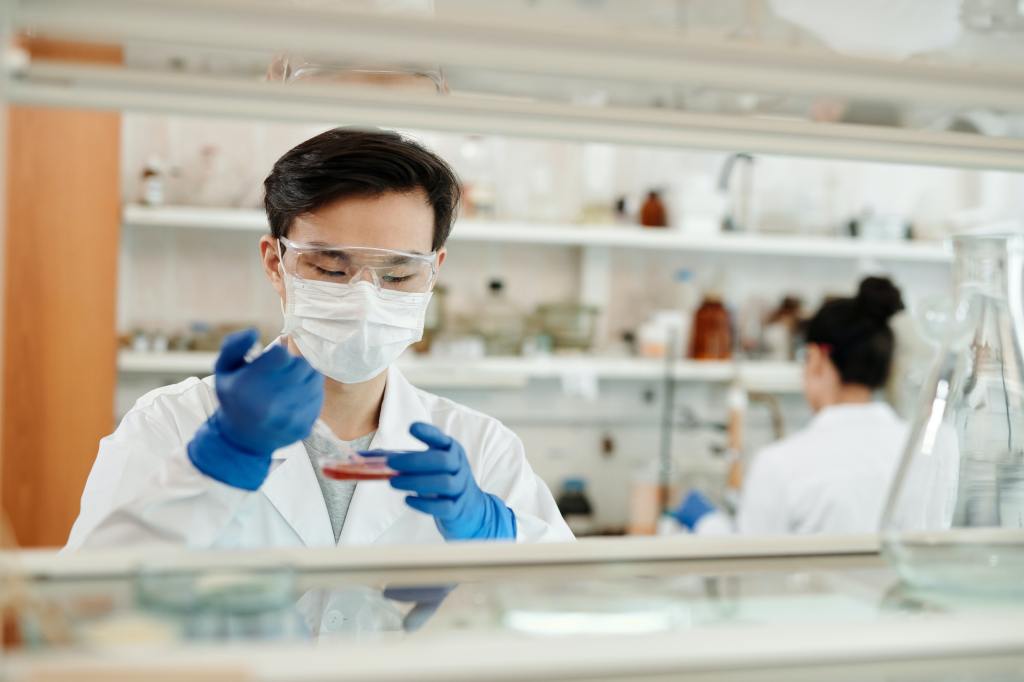

▪ The simple addition, deletion, or manipulation of a single trait in an organism to create a desired change
▪ Genetic engineering is one of the most important technologies now available to scientists
▪ Genetic Engineering, the process of extracting DNA from one organism and combining it with the DNA of another organism, thus introducing new hereditary traits into the recipient organism
Techniques of Genetic Engineering
▪ Recombinant DNA: This technique involves following steps:
▪ Gene of interest is isolated from the DNA molecule using the restriction enzymes
▪ After isolation, gene is inserted into a vector and is cloned to make multiple copies of gene of interest
▪ When the cloning is done, the gene is incorporated into the plasmid
▪ Now the gene or DNA along with plasmid is called as recombinant DNA
Electro and Chemical Poration
▪ In this method, pores are created in the membrane of the cell and genes can be transferred easily.
▪ Special chemicals are used to make pores in the cell surface.
▪ Sometimes cells are exposed to weak electric current, it also makes pores in the surface of the cells and genes can easily pass through these pores.
Microinjection
▪ Other methods do not rely on biological vectors like plasmids and viruses.
▪ One of these is called microinjection and involves simply injecting genetic material containing the new gene into the recipient cell.
▪ Where the cell is large enough, as many plant and animal cells are, the injection can be done with a fine-tipped glass needle.
▪ Somehow the injected genes find the host cell genes and incorporate themselves among them.
Bioballistics
▪ This is the method, in which small silver particles are used to insert the genetic material into the recipient cell.
▪ These silver are coated with the genetic material and when released in the cell, genetic material incorporates with the genes of the host cell.
▪ In one projectile method, shot gun is used to insert the silvers into the host cell.
Clinical Implications of Genetic Engineering
In the Field of Medical Treatment:
▪ Genetic engineering can be employed to treat human diseases by manipulating the disease genes.
▪ First human insulin developed by using the techniques of genetic engineering, insulin is the special component of the body and lack of this component causes diabetes.
▪ Gene therapy is used for medical purpose. It is used to replace the defective genes with the healthy genes during the genetic and other diseases. Many heart and autoimmune diseases have been treated by using gene therapy.
In the Field of Agriculture:
▪ Using the techniques of genetic engineering, agriculturists have succeeded in making pesticides and insecticides which protect the plants against pests and insects and help grow the plant quickly.
▪ Genetic engineering technology has been employed effectively in the creation of genetically modified foods that have superior yields with high nutritional value.
▪ It increases the efficiency of photosynthesis, increasing the resistance of the plant to salinity and also reducing the plant’s need for a nitrogen fertilizer.
Pharmaceuticals
▪ Genetic engineering has enabled the pharmaceutical industries to make such drugs which fight against the diseases efficiently.
Cloning
▪ Cloning could be used to replace the damaged heart cells by heart attack with normal clone cells.
▪ Cloning could enable a sterile woman to have a child derived from her own body, by using any cell from her organism.
Disadvantages of Genetic Engineering
▪ Genetically modified plants and animals have the potential to replace traditional farming or poultry. This will result in destruction of economies based on these products.
▪ Newly introduced genetically modified organism may destroy food chains and damage food webs.
▪ Genetically modified ingredients can cause cancer.
▪ It would be costly.
▪ Misuse of this technology in the production of biological warfare or weapons is a very major disadvantage.
▪ Prospect of creating new species might create natural imbalances especially on the habitats and feeding habits of other animals. This may affect the biodiversity.
Genes
▪ “An inherited factor which determines the biological characters of an organism is called as Gene.”
▪ The term gene was used for the first time by Johannsen (1909).
▪ According to him “Genes are the functional units of life found on chromosomes.”
▪ Each gene occupies specific position on a specific chromosome, this position is called locus.
▪ Genes determine the physical and physiological characteristics of the organism.
Molecular Structure of Gene
▪ Benzer has proposed a model to explain the structure of genes. According to this model, a gene is composed of the following parts:
▪ Cistron: It is the functional unit of gene, each unit of which is responsible for a product. It is the structure of gene which synthesizes a polypeptide chain. It may be composed of 30,000 nucleotides.
▪ Muton: It is the smallest unit of DNA which could undergo mutation. Thus, it is a unit of mutation. It is generally composed of one or more nucleotides.
▪ Recon: It is the smallest unit of DNA capable of undergoing crossing-over and recombination. It may consist of one pair of nucleotide.
▪ Operon: Operon is a group of structural and controller genes which control catabolism genetically.
▪ Replicon: It is the unit of replication.
Chromosomes
▪ The term ‘chromosome’ was introduced by Waldeyer (1888) for the darkly stained individualized bodies located in the nucleus.
▪ A chromosome is an organized structure of DNA and protein found in cells.
▪ It is a single piece of coiled DNA containing many genes, regulatory elements and other nucleotide sequences.
▪ Our body cells have 23 pairs of chromosomes. In each pair, one chromosome comes from your mother and one from your father.
Types of Chromosomes
▪ Types of chromosome on the basis of number of Centromeres:
| Type | Number of cetromeres |
| Acentric | Nil |
| Monocentric | One |
| Dicentric | Two |
| Tricentric | Three |
| Polycentric | Many |
| Holocentric | Diffused |
· Types of chromosome on the basis of position of centromere:
| Type | Position of Centromere | Shape | Details |
| Metacentric | Centre (median) | V-shaped | Equal arms |
| Submetacentric | Near centre (sub-median) | J or L shaped | Two un-equal arms |
| Acrocentric | Near at one end (sub-terminal) | One arm very short and another long | |
| Telocentric | Terminal | Rod like |
Special Types of Chromosomes
▪ Special types of chromosomes are found in certain eukaryotic cells and these chromosomes similar to their name are found to be different from the other chromosomes and are present in certain specialized cells.
▪ They are found to be very large in size and hence they are also called giant chromosomes.
They are of two types:
▪ Lampbrush Chromosome
▪ Polytene or Salivary Gland Chromosome
Lampbrush Chromosome
▪ The Lamp brush chromosomes were first discovered by Flemming in the year 1882.
▪ They got this name as they resemble the shape of a brush.
▪ These chromosomes are seen in the diplotene stage of the meiotic prophase in the oocytes of animal Salamandor and in the giant nuclei of the unicellular algae Acetabularia.
Functions of Lampbrush Chromosomes:
▪ They synthesize RNA and protein by their loop.
▪ These chromosomes may help in the formation of certain amount of yolk material for the egg.
Polytene or Salivary Gland Chromosome
▪ The polytene chromosome was first discovered by E.G.Balbiani in the year 1881 in the salivary glands of the species drosophila. Hence, these chromosomes are also called salivary gland chromosomes.
▪ They have an extremely large puff in the center and are called Chromosomal puff or Balbiani ring.
▪ Along their body, they have alternate light bands (clear zones) and dark bands respectively like in a zebra.
Functions of Polytene Chromosomes
▪ They carry genes (DNA) which ultimately control physiology of an organism.
▪ The production of nucleolar material is entirely done by heterochromatin.
▪ These chromosomes are responsible for the formation of saliva in insects bearing it.
What is Gene Expression?
· Gene: A DNA segment that contains the all genetic information required to encodes RNA and protein molecules.
Gene Expression:
o It is the process by which information from a gene is used in the synthesis of a functional gene product.
o These products are often proteins, but in non-protein coding genes such as rRNA genes or tRNA genes, the product is a functional RNA.
The process of gene expression involves two main stages:
o Transcription: The production of messenger RNA (mRNA) by the enzyme RNA polymerase, and the processing of the resulting mRNA molecule.
o Translation: The use of mRNA to direct protein synthesis, and the subsequent post-translational processing of the protein molecule.
Regulation of Gene Expression
Regulation of gene expression includes a wide range of mechanisms that are used by cells to increase or decrease the production of specific gene products (protein or RNA), and is informally termed gene regulation.
In simple terms, regulation of gene expression is of two types:
· Positive Regulation: When the expression of genetic is quantitatively increased by the presence of specific regulatory element is known as positive regulation. Element modulating positive regulation is known as activator or positive regulator.
· Negative Regulation: When the expression of genetic information diminished by the presence of specific regulatory element. The element or molecule mediating the negative regulation is said to be repressor.
Classification of gene with respect to their Expression
· Constitutive (house-keeping) genes: These are expressed at a fixed rate, irrespective to the cell condition. Their structure is simpler.
· Controllable genes: These are expressed only as needed. Their amount may increase or decrease with respect to their basal level in different condition. Their structure is relatively complicated with some response elements.
Gene Regulation in Prokaryotes
· Prokaryotes have two levels of gene control.
· Transcriptional mechanisms control the synthesis of mRNA and translational mechanisms control the synthesis of protein after mRNA has been produced.
Operons: Operons are groups of genes that function to produce proteins needed by the cell.
There are two different kinds of genes in operons:
· Structural genes:– Code for proteins needed for the normal operation of the cell. For example, they may be proteins needed for the breakdown of sugars. The structural genes are grouped together and a single mRNA molecule is produced during their transcription.
· Regulator genes:- code for proteins that regulate other genes.
The lac operon: Lactose is a sugar found in milk. If lactose is present, E. coli (the common intestinal bacterium) needs to produce the necessary enzymes to digest it. Three different enzymes are needed.
· The genes A, B, and C represent the genes whose products are necessary to digest lactose.
· In the normal condition, the genes do not function because a repressor protein is active and bound to the DNA preventing transcription.
· When the repressor protein is bound to the DNA, RNA polymerase cannot bind to the DNA.
· The protein must be removed before the genes can be transcribed.
· Allolactose, an isomer of lactose, binds with the repressor protein inactivating it.
· The repressor protein is produced by a regulator gene. The region of DNA where the repressor protein binds is the operator site. The promoter site is a region of DNA where RNA polymerase can bind. The entire unit (promoter, operator, and genes) is an operon.
· The operator acts like a switch that can turn several genes on or off at the same time.
· The lac operon is an example of an inducible operon because the structural genes are normally inactive. They are activated when lactose is present.
The trp Operon:
· Repressible operons are the opposite of inducible operons. Transcription occurs continuously and the repressor protein must be activated to stop transcription.
· Tryptophan is an amino acid needed by E. coli and the genes that code for proteins that produce tryptophan are continuously transcribed.
· If tryptophan is present in the environment, however, E. coli does not need to synthesize it and the tryptophan-synthesizing genes should be turned off. This occurs when tryptophan binds with the repressor protein, activating it. Unlike the repressor discussed with the lac operon, this repressor will not bind to the DNA unless it is activated by binding with tryptophan. Tryptophan is therefore a corepressor.
· The trp operon is an example of a repressible operon because the structural genes are active and are inactivated when tryptophan is present.
| Structural Genes | Repressor | |
| Inducible Operons | Inactive | Active (inhibits) |
| Repressible Operons | Active | Inactive (inhibits when activated) |
Gene Regulation in Eukaryotes
· There are several methods used by eukaryotes.
. Transcription Control: The most common type of genetic regulation, turning on and off of mRNA formation.
. Post-Transcriptional Control: Regulation of the processing of a pre-mRNA into a mature mRNA.
. Translational Control: Regulation of the rate of Initiation.
· Post-Translational Control: Regulation of the modification of an immature or inactive protein to form an active protein.
Introduction
· PCR (Polymerase Chain Reaction) is a revolutionary method developed by Kary Mullis in the 1980s.
· PCR is based on using the ability of DNA polymerase to synthesize new strand of DNA complementary to the offered template strand.
· Because DNA polymerase can add a nucleotide only onto a pre-existing 3′-OH group, it needs a primer to which it can add the first nucleotide.
· This requirement makes it possible to delineate a specific region of template sequence that the researcher wants to amplify.
· At the end of the PCR reaction, the specific sequence will be accumulated in billions of copies (amplicons).
Principle of PCR
· PCR is an in vitro technique based on the principle of DNA polymerization reaction.
· As the name implies, it is a chain reaction, a small fragment of the DNA section of interest needs to be identified which serves as the template for producing the primers that initiate the reaction.
· One DNA molecule is used to produce two copies, then four, then eight and so forth. This continuous doubling is accomplished by specific proteins known as polymerases.
· To do their job polymerases require a supply of DNA building blocks, i.e., the nucleotides consisting of the four bases:
. adenine (A)
. thymine (T)
. cytosine (C)
. guanine (G)
· They also need a small fragment of DNA, known as the primer, to which they attach the building blocks as well as a longer DNA molecule to serve as a template for constructing the new strand.
· If these three ingredients are supplied, the enzymes will construct exact copies of the template.
Materials for PCR
·Primers: Short pieces of single-stranded DNA that, are complementary to the target sequence. The polymerase begins synthesizing new DNA from the end of the primer.
· DNA template: The sample DNA that contains the target sequence. At the beginning of the reaction, high temperature is applied to the original double-stranded DNA molecule to separate the strands from each other.
· DNA polymerase: A type of enzyme that synthesizes new strands of DNA complementary to the target sequence. The first and most commonly used of these enzymes is Taq DNA polymerase.
· Nucleotides (dNTPs or deoxynucleotide triphosphates): Single units of the bases A, T, G, and C, which are essentially “building blocks” for new DNA strands.
PCR Process
Denaturation:–
. The DNA sequence which is to be amplified by PCR is known as the template.
. The double-stranded DNA template must be denatured into two complementary single strands of DNA.
. DNA undergoes rapid denaturation at 92-94˚C.
Annealing:-
. The second step requires lowering the temperature to allow annealing of the primers to the single stranded DNA
. The optimal annealing temperature depends upon the melting temperature of the primer-template hybrid.
. If the temperature is too high the primers will not anneal efficiently, and if the annealing temperature is too low the primers may anneal nonspecifically.
. Annealing is usually done, at 54˚C because the primers are in vast excess to the template, the annealing reaction occurs very quickly once the proper temperature has been reached.
. To insure adequate specificity, the primers must be 20-30 nucleotides long.
Extension:-
. Enzymatic extension of the primers to produce copies that can serve as templates in subsequent cycles.
· Also known as polymerization, this is the final step of the PCR cycle in which the temperature of the reaction is adjusted to the optimum for Taq Polymerase activity, which is between 72˚C.
. During this step, the polymerase enzyme producing a complimentary copy of the DNA template in the region specified by the annealed primer.
Application of PCR
· Used in molecular biology and genetic disease research to identify new genes.
· Viral targets, such as HIV-1 and HCV can also be identified and quantitated by PCR
· In such fields as anthropology and evolution, sequences of degraded ancient DNAs can be tracked after PCR amplification.
· Environmental and food pathogens can be quickly identified and quantitated at high sensitivity in complex matrices with simple sample preparation techniques.
·Very low probability of nonspecific amplification.
Introduction
· Recombinant DNA technology includes the techniques developed for the isolation, manipulation and alteration of DNA in a test tube, as well as the transfer of this DNA back into cells.
· The technology of preparing recombinant DNA in vitro by cutting up DNA molecules and splicing together fragments from more than one organism
· The discovery of recombinant DNA was considered the “birth” of modern biotechnology.
Recombinant DNA
· Deoxyribonucleic acid, or DNA, is the blueprint for life.
· All DNA is made up of a base consisting of sugar, phosphate and one nitrogen base.
· There are four nitrogen bases, adenine (A), thymine (T), guanine (G), and cytosine (C). The nitrogen bases are found in pairs, with A & T and G & C paired together.
· Recombinant DNA is DNA from two different sources that has been combined in vitro (outside living organisms).
There are three main reasons for creating recombinant DNA:
. To create a protein product
. To create multiple copies of genes
. To insert foreign genes into other organisms to give those organisms a new trait
How is Recombinant DNA made?
There are three different methods by which Recombinant DNA is made.
Transformation:
· The first step in transformation is to select a piece of DNA to be inserted
into a vector.
· The second step is to cut that piece of DNA with a restriction enzyme and then ligate the DNA insert into the vector with DNA Ligase.
· The insert contains a selectable marker which allows for identification of recombinant molecules.
· An antibiotic marker is often used so a host cell without a vector dies when exposed to a certain antibiotic, and the host with the vector will live because it is resistant.
· The vector is inserted into a host cell, in a process called transformation.
· One example of a possible host cell is E. coli. The host cells must be specially
prepared to take up the foreign DNA.
Non-Bacterial Transformation:
· This is a process very similar to Transformation, which was described above.
· The only difference between the two is non-bacterial does not use bacteria such as E. coli for the host.
· In microinjection, the DNA is injected directly into the nucleus of the cell being transformed.
· In biolistics, the host cells are bombarded with high velocity
microprojectiles, such as particles of gold or tungsten that have been coated
with DNA.
Phage Introduction:
· Phage introduction is the process of transfection, which is equivalent to transformation, except a phage is used instead of bacteria.
. In vitro packaging of a vector is used.
How does Recombinant DNA work?
· First, the gene of interest must be identified.
· For example, the insulin gene would have to be localized in the human genome.
· Then a plasmid has to be isolated from bacteria cells.
· A plasmid is a circular, double-stranded DNA sequence that replicates in bacteria and is separate from the bacterial chromosome.
· The gene is inserted into the plasmid, and the plasmid is taken up by a bacterium.
·The bacteria reproduce, and start creating the desired protein.
Why is Recombinant DNA important?
· There are some of the areas where Recombinant DNA will have an impact.
. Better Crops (drought & heat resistance)
. Recombinant vaccines (i.e. Hepatitis B)
. Prevention and cure of sickle cell anemia
. Prevention and cure of cystic fibrosis
. Production of clotting factors
. Production of insulin
. Production of recombinant pharmaceuticals
. Plants that produce their own insecticides
. Germ line and somatic gene therapy
Cloning
· Cloning describes the processes used to create an exact genetic replica of another cell, tissue or organism.
· The copied material, which has the same genetic makeup as the original, is referred to as a Clone.
· The most famous clone was a Scottish sheep named Dolly.
Types of Cloning
There are three types of Cloning
. Gene cloning
. Reproductive cloning
. Therapeutic cloning
Gene Cloning
· The terms DNA cloning and gene cloning both refer to the same process.
· The transfer of a DNA fragment of interest from one organism to a self-replicating genetic element such as a bacterial plasmid.
· In other words, a small piece of the DNA strand is removed and united with a plasmid which reproduces itself to create multiple copies of the same DNA code.
· This plasmid is also known as a vector.
· This copied DNA can then be propagated in a foreign host cell.
· After it is introduced into a suitable host cell, the recombinant vector can then be reproduced along with the host cell DNA.
Reproductive Cloning
· Reproductive cloning is a technology used to generate an animal that has the same nuclear DNA as another currently or previously existing animal.
· Dolly was created by reproductive cloning technology.
· In a process called “somatic cell nuclear transfer” (SCNT), scientists transfer genetic material from the nucleus of a donor adult cell to an egg whose nucleus, and thus its genetic material, has been removed.
· The reconstructed egg containing the DNA from a donor cell must be treated with chemicals or electric current in order to stimulate cell division.
· Once the cloned embryo reaches a suitable stage, it is transferred to the uterus of a female host where it continues to develop until birth.
Therapeutic Cloning
· It is also called “embryo cloning,” is the production of human embryos for use in research.
· The goal of this process is not to create cloned human beings, but rather to harvest stem cells that can be used to study human development and to treat disease.
· Stem cells are important to biomedical researchers because they can be used to generate virtually any type of specialized cell in the human body.
· Stem cells are extracted from the egg after it has divided for 5 days. The egg at this stage of development is called a blastocyst.
Clinical Implications of Cloning
· Cloning could produce an organ to save life of a person in need of organ transplant.
· Cloning could enable a sterile woman to have a child derived from her own body, by using any cell from her organism.
· Cloned animals such as cattle, hogs and chickens can be bred to provide more milk and eggs than animals that are naturally reproduced.
· Cloning permits a greater propagation of insects that help control plagues that damage agricultural products, thus reducing the use of insecticides and pesticides, improving the quality of human life and protecting the environment.
· Cloning will also make it possible to have children with the characteristics of one parent, in the case where the other suffers from a serious genetic illness that has not yet been cured.
Disadvantages of Cloning
· Losing gene diversity is the disadvantages of cloning.
· Gene diversity is what keeps an entire species from being wiped out by a singular virus if none of them have natural immunities. This is due to the lack of gene diversity.
· Another disadvantage of cloning is that there are a lot of ethical considerations that would cause most people to protest. One of these ethical concerns is that cloning is unnatural, and considered “playing God.”
Gene Therapy
· Genes, who are carried on chromosomes, are the basic physical and functional units of heredity.
· Genes are specific sequences of bases that encode instructions on how to make proteins.
· Although genes get a lot of attention, it’s the proteins that perform most life functions and even make up the majority of cellular structures.
· Gene therapy is a technique for correcting defective genes responsible for disease development.
Several approaches may use for correcting faulty genes:-
· A normal gene may be inserted into a nonspecific location within the genome to replace a nonfunctional gene. This approach is most common.
· An abnormal gene could be swapped for a normal gene through homologous recombination.
· The abnormal gene could be repaired through selective reverse mutation, which returns the gene to its normal function.
. The regulation of a particular gene could be altered.
Types of Gene Therapy
Somatic Gene Therapy:
. In the case of somatic gene therapy, the therapeutic genes are transferred into the somatic cells of a patient.
. Any modifications and effects will be restricted to the individual patient only, and will not be inherited by the patient’s offspring or later generations.
Germ Line Gene Therapy:
. In case of germ line gene therapy germ cells that is sperms or eggs are modified by the introduction of functional genes, which are ordinarily integrated into their genomes.
. Therefore the change due to therapy is heritable and passed onto the later generations.
How Does Gene Therapy Work?
· In most gene therapy studies, a “normal” gene is inserted into the genome to replace an “abnormal,” disease-causing gene.
· A carrier molecule called a vector must be used to deliver the therapeutic gene to the patient’s target cells.
· Currently, the most common vector is a virus that has been genetically altered to carry genetic material into the cells ‘genes’.
Researchers are trying to take advantage of this unique capability.
. They remove the original disease causing genes from the viruses
. Then replace them with the genes needed to stop disease
. Then insert the altered viruses into a person’s diseased cells to deliver their genetic material.
Vectors Used in Gene Therapy
Retroviruses:
. A class of viruses that can create double-stranded DNA copies of their RNA genomes.
. These copies of its genome can be integrated into the chromosomes of host cells.
. Human immunodeficiency virus (HIV) is a retrovirus.
Adenoviruses:
. A class of viruses with double-stranded DNA genomes that cause respiratory, intestinal, and eye infections in humans
. The virus that causes the common cold is an adenovirus
Adeno-associated viruses:
. A class of small, single-stranded DNA viruses that can insert their genetic material at a specific site on chromosome 19
Herpes simplex viruses:
. A class of double-stranded DNA viruses that infect a particular cell type, neurons
. Herpes simplex virus type 1 is a common human pathogen that causes cold sores
Clinical Implications of Gene Therapy
· Gene therapy can be used to fix defective genes or to replace missing genes.
· Many diseases are the result of just one gene malfunctioning; sickle cell anemia, cystic fibrosis, SCID, are all caused by one defective gene.
· To correct the problem, gene therapy is used to deliver genes that function correctly.
· A cancer patient can also get advantage of this technique by insertion of genetically altered vectors into human genome.
Definition
· Electrophoresis is a technique used in the laboratory that results in the separation of charged molecules.
· Electrophoresis of positively charged particles (cations) is called cataphoresis, while electrophoresis of negatively charged particles (anions) is called anaphoresis.
· “Electrophoresis is a process, which enables separating molecules according to their size and electrical charge by applying an electric current.”
· It is applied for the separation and characterization of proteins, nucleic acids and subcellular-sized particles like viruses and small organelles.
Principle
· When charged molecules are placed in an electric field, they migrate toward either the positive or negative pole according to their charge.
· Positive ions (cations) will migrate to the cathode, the negative electrode. Negative ions (anions) will migrate to the anode, the positive electrode.
Types
· SDS-PAGE (Sodium Dodecyl Sulfate – Polyacrylamide Gel Electrophoresis):
. Sodium dodecyl sulfate – polyacrylamide gel electrophoresis is used to separate proteins based on size.
. The proteins are unfolded, or denatured, using SDS detergent, and run on a polyacrylamide gel.
Native Electrophoresis:
. Proteins can remain folded in the native conformation and run on gels to separate them by both mass and charge.
Electrofocusing Electrophoresis:
. Electrofocusing separates proteins on the basis of charge as well as pH, the gel used in this type of electrophoresis has pH gradient.
DNA Sequencing Gels:
. Denatured DNA can be run on polyacrylamide gels, which allows scientists to determine the sequence of the molecule.
Electrophoretic Techniques
Moving-boundary electrophoresis:
. This technique, used exclusively for the determination of the mobility, is particularly suitable for substances of high molecular weight with poor diffusion properties.
. The principle is the motion of charged particles through a stationary liquid under the influence of an electric field
. The apparatus includes a U-shaped cell filled with buffer solution and electrodes immersed at its end
. On applying voltage, the compounds will migrate to the anode or cathode depending on their charges.
Zone Electrophoresis:
. This method uses only small sample sizes
. A drop of sample is applied in a band to a thin sheet of supporting material, like paper, that has been soaked in a slightly-alkaline salt solution.
. A direct current can flow through the paper because of conductivity of the buffer.
. The serum proteins move toward the positive electrode.
. The stronger the negative charge on a protein, the faster it migrates.
. After 20 min, the current is turned off, the proteins stained to make them visible.
. The separated proteins appear as distinct bands.
Paper Electrophoresis:
. This technique is useful for the separation of small charged molecules such as amino acids and small proteins.
. A strip of filter paper is moistened with buffer and the ends of the strip are immersed into buffer reservoirs containing the electrodes.
. The samples are spotted in the center of the paper, high voltage is applied, and the spots migrate according to their charges.
. After electrophoresis, the separated components can be detected by a variety of staining techniques, depending upon their chemical identity.
Capillary Electrophoresis:
. Capillary electrophoresis is an analytical technique that separates ions based on their electrophoretic mobility with the use of an applied voltage.
. The electrophoretic mobility is dependent upon the charge of the molecule, the viscosity, and the atom’s radius.
. The rate at which the particle moves is directly proportional to the applied electric field–the greater the field strength, the fast the mobility.
Application of Electrophoresis
· Electrophoresis can be used to determine the mass of an object.
· Electrophoresis is also used when DNA is involved.
· Deoxyribonucleic acid (DNA) or ribonucleic acid (RNA) fragments of different sizes can be separated using either agarose gel electrophoresis or polyacrylamide gel electrophoresis, depending on the approximate molecular weight of the fragments.
· Through electrophoresis, the amount of proteins in your blood or in your urine is measured.
· There are several vaccines that have been purified, processed and analyzed through electrophoresis, such as the influenza vaccine, hepatitis vaccine and polio vaccine.
· DNA markers of known mass are used to estimate the size of the objects traveling once electrophoresis has completed.
· DNA electrophoresis is used to study the genetics of plants, humans, and animals.
What is Blotting?
· Blotting is technique for transferring DNA, RNA and proteins onto a carrier so they can be separated, and often follows the use of a gel electrophoresis.
· The southern blot is used for transferring DNA, the northern blot for RNA and the western blot for protein.
Blotting Paper
· Blotting paper, sometimes called bibulous paper, is a highly absorbent type of paper or other material.
· It is used to absorb an excess of liquid substances (such as ink or oil) from the surface.
Whatman 3MM paper is the world’s most widely used blotting paper. This acceptance and usage is due to the high quality, purity and consistency that are relied upon by Southern, Northern and Western transfers.
· Blotting paper is made from different materials of varying thickness, softness, etc. depending on the application.
· It is often made of cotton and manufactured on special paper machines. Blotting paper is also used for chromatography.
Types of Blotting Techniques
· Southern Blotting:
. Southern blotting is a technique for detecting specific DNA fragments in a complex mixture.
. The procedure of Southern blotting was first developed by Edward Southern and was named after his name.
Principle:
· The mixture of molecule is separated.
· The molecules are immobilized on a matrix.
· The probe is added to the matrix to bind to the molecules.
· Any unbound probes are then removed.
· The place where the probe is connected corresponds to the location of the immobilized target molecule.
Steps in Southern blotting:
· The DNA to be analyzed is digested with restriction enzymes and then separated by agarose gel electrophoresis.
· The DNA fragments in the gel are denatured with alkaline solution and transferred onto a nitrocellulose filter or nylon membrane by blotting, preserving the distribution of the DNA fragments in the gel.
· The nitrocellulose filter is incubated with a specific probe. The location of the DNA fragment that hybridizes with the probe can be displayed by autoradiography.
· Northern Blotting:
o Northern blotting is a technique for detection of specific RNA sequences.
o Northern blotting is developed by James Alwine and George Stark and was named such by analogy to Southern blotting.
Steps in Northern Blotting:
· The first step in a northern blot is to denature, or separate, the RNA within the sample into single strands, which ensures that the strands are unfolded and that there is no bonding between strands.
· The RNA molecules are then separated according to their sizes using a method called gel electrophoresis.
· Following separation, the RNA is transferred from the gel onto a blotting membrane.
· Once the transfer is complete, the blotting membrane carries all of the RNA bands originally on the gel.
· The membrane is treated with a small piece of DNA or RNA called a probe, which has been designed to have a sequence that is complementary to a particular RNA sequence in the sample; this allows the probe to hybridize, or bind, to a specific RNA fragment on the membrane.
· Thus, following hybridization, the probe permits the RNA molecule of interest to be detected from among the many different RNA molecules on the membrane.
Western Blotting:
o Western blotting is used to detect a particular protein in a mixture.
o The probe used is therefore not DNA or RNA, but antibodies. The technique is also called “immunoblotting”.
Steps in Western Blotting:
· Proteins are separated by gel electrophoresis, usually SDS-PAGE.
· Electroblotting transfers the separated proteins from the gel to the surface of a nitrocellulose membrane.
· The blot is incubated with a generic protein which binds to any remaining sticky places on the nitrocellulose.
· An antibody is then added to the solution which is able to bind to its specific protein.
· The antibody has an enzyme (e.g. alkaline phosphatase or horseradish peroxidase) or dye attached to it which cannot be seen at this time.
· The location of the antibody is revealed by incubating it with a colorless substrate that the attached enzyme converts to a colored product that can be seen and photographed.
Application
Southern Blotting:
 Science-Blogger Curiosity